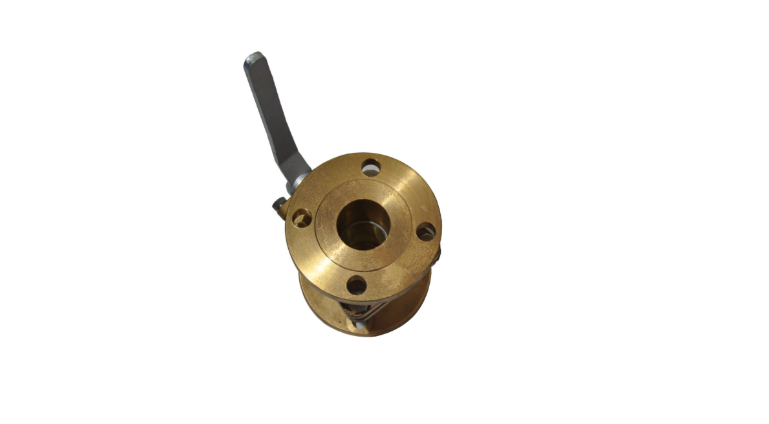
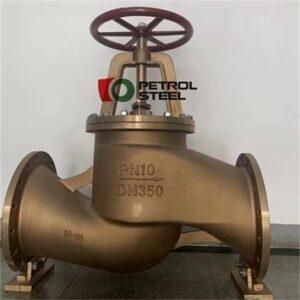
The ASTM ANSI Bronze Marine Valve is only one element of the procurement deliverable for an international EPC project, shipbuilding contract, offshore installation, or marine piping package. Also important is the quality documentation package that shows what was delivered, what material was used, what inspections were performed, what tests were carried out, and whether the delivered valves can be traced back to the purchase order and applicable specification. That is why an experienced EPC procurement engineer would not normally evaluate a bronze marine valve on the basis of its commercial quotation or product catalog. They also perform a final review of the proposed Quality Plan, Inspection & Test Plan (ITP), Material Test Certificate (MTC), pressure test records, dimensional inspection, traceability documents, certificates of conformity, and any required Third-Party Inspection (TPI). The level of documentation shall always be determined in accordance with the contractual hierarchy: Purchase Order -> Project Specification -> Valve Datasheet -> Approved ITP -> Inspection Class -> Classification Society / Client Requirements (Data). For instance, ASTM B62 specifies composition bronze castings for valves, flanges, and fittings and the appropriate copper alloy as UNS C83600. The requirements are chemical composition, mechanical properties, and casting-related requirements, which means that the material documentation shall be in accordance with the actual alloy and applicable material specification. This is important for an EPC buyer, as a supplier statement of “ASTM bronze valve” does not in itself define the full inspection or documentation package. A professional procurement file has to describe what valve is being purchased, how conformity will be demonstrated, and how conformity will be documented.
The first and most fundamental set of documents concerns the identification and traceability of the material. For C83600 bronze marine valves, the buyer may require a Material Test Certificate showing applicable material specification, UNS designation, heat or cast identification, chemical composition, and mechanical properties as required by applicable specification. C83600, the 85-5-5-5 composition bronze, is properly designated as UNS B62 by ASTM, which also lists the requirements for chemical composition and mechanical properties. Do not automatically apply B62 to other copper alloy materials, but check the appropriate ASTM specification. This is especially true if your project calls for C95800. Nickel-aluminum bronze or another copper alloy. The MTC should therefore be checked against the valve material list and purchase order and not simply filed after delivery. Usually, experienced QC engineers will check the relationship between PO item number, valve tag, material grade, heat/cast number, and MTC final inspection record. Where EN 10204 documentation is specified, the purchaser may request a 3.1 inspection certificate or, if the contractual inspection arrangement requires, a 3.2 certificate, with the involvement of an authorized representative of the purchaser or an official inspection body. But 3.1 and 3.2 are documentation/inspection provisions and not automatic requirements for every bronze marine valve. The PO, the project specification, the inspection class, and the client’s requirements determine the correct certificate level. The same goes for PMI. Positive material identification can be helpful where specified for material verification but should not be touted as a blanket requirement for all bronze valves. In case PMI is needed, the inspection method, sampling level, and acceptance criteria should be clearly defined before the start of production and not added unexpectedly at the end of the project.
The second major category is documentation of valve inspection and pressure testing. The final quality file for a typical bronze marine valve assembly may include dimensional inspection records, hydrostatic shell test results, seat leakage test results, functional or operational checks, pressure-test records, and final visual inspection. Exact tests depend on the type of valve and applicable standard. The inspection record shall normally include the valve tag or serial number, size, pressure class, material, test medium, test pressure, test duration, acceptance criteria, test equipment, date of inspection, and the approval of the inspector responsible. This information is far more useful to an EPC engineer than a general statement like “100% tested.” For example, if a purchase order calls for a Class 150 bronze globe valve, then the final test report must allow the buyer to tie the tested valve back to the PO item and the technical specification. Dimensional inspection is of special importance to marine replacement valves. A valve can pass pressure testing yet cause installation problems when the face-to-face dimension, flange drilling, overall dimensions, threaded connection, or orientation do not match the piping system. For flanged copper-alloy valves, a significant reference is ASME B16.24, where applicable, covering cast copper-alloy pipe flanges, flanged fittings and valves, and including requirements for classes, dimensions, pressure-temperature ratings, and other pertinent characteristics. Therefore, the inspection dossier cannot be considered as a list of certificates. It should provide a documented chain of evidence that the valve supplied complies with the approved design, material, dimensions, and testing requirements.
| Document / Record |
Typical Requirement |
Purpose for EPC / Marine Buyer |
| Material Test Certificate (MTC) |
As specified |
Confirms material grade, chemistry, and traceability |
| Chemical Composition |
As applicable |
Verifies alloy against specified ASTM/UNS grade |
| Mechanical Test Results |
Where required |
Demonstrates applicable mechanical properties |
| Casting / Heat / Cast Traceability |
Recommended / project-specific |
Links valve material to original production record |
| Dimensional Inspection Report |
Common project requirement |
Confirms critical dimensions and connection details |
| Hydrostatic Shell Test Report |
As specified |
Records pressure-containing body test |
| Seat Leakage Test Report |
As specified |
Confirms valve seat sealing performance |
| Functional / Operational Test |
As applicable |
Confirms opening, closing, and operating function |
| PMI Report |
Where specified |
Additional material verification |
| Inspection & Test Plan (ITP) |
Project-specific |
Defines inspection stages, hold/witness/review points |
| Certificate of Conformity (CoC) |
As specified |
Supplier’s declaration of compliance |
| Manufacturer Inspection Certificate |
As specified |
Confirms final inspection and release status |
| EN 10204 3.1 |
Where specified |
Independent inspection certificate issued by manufacturer |
| EN 10204 3.2 |
Where required |
Additional purchaser / authorized inspection involvement |
| Third-Party Inspection (TPI) Report |
Project-specific |
Independent verification of agreed inspection scope |
| Packing / Marking / Traceability Record |
As applicable |
Links delivered valves with documentation. |
| Final Quality Dossier / MDR |
Project-specific |
Consolidates records for project handover |
The third issue is third-party inspection, classification society involvement, and project-specific certification. Inspection requirements for marine projects can vary widely depending upon whether the valves are for a commercial vessel, offshore platform, ship repair project, seawater desalination plant, marine utility system, or an industrial EPC package. A buyer may refer to TPI by an organization such as DNV, Bureau Veritas, Lloyd’s Register, ABS, or another approved inspection body, but the scope of inspection should be clearly defined. For example, DNV offers certification and verification services for marine components and systems, including third-party inspection, testing, and certification of materials and components. DNV also states that manufacturer approval and product-related certification are driven by the applicable maritime requirements and not by a generic requirement for every product sold into the marine market. So a phrase like “DNV 3.2 required” should trigger an effort to clarify: Does the project require a DNV classification certificate, a DNV surveyor witnessing inspection, an EN 10204 3.2 certificate, or class approval for the valve? These are not necessarily the same. This distinction helps avoid a common international procurement problem, where the supplier thinks “TPI included” is enough to meet the requirement, when in fact it is the EPC or shipyard that requires a specific classification-society certificate or witnessed inspection stage. The safest way is to define the inspection authority, inspection scope, applicable standard, witness/hold points, type of certificate, and final documentation format before you start manufacturing. For valves to be used on classed vessels or offshore units, purchasers should also verify the relevant class rules and whether the particular valve type, maker, material, or service demands formal approval or certification.
The fourth issue is how to arrange the documents into a usable project quality dossier. International customers rarely want a random collection of certificates in PDF format received weeks after the shipment. Your documentation package has to be in a format that allows the EPC QA/QC engineer to easily find all valves and related documentation. The practical dossier may comprise the approved datasheet and drawings, material certificates, inspection reports, pressure-test reports, dimensional reports, TPI records, certificates of conformity, packing and marking records, and any applicable classification or special certification. A document index or a traceability matrix valve by valve for multiple sizes and materials can save a lot of review time. For example, a project may have 50 bronze marine valves in several sizes, valve types, and material grades. If the supplier issues one generic MTC without good heat/cast or item traceability, the buyer may have problems proving which certificate relates to which valve. In contrast, a well-structured dossier can show PO number → line item → valve tag → size/class → material → heat/cast number → MTC → inspection report → pressure test report → TPI release → packing list. This is particularly useful during site installation, commissioning, warranty claims, or future maintenance. Documentation control is also a commercial risk-control function for an international trading team. Missing documents may delay shipment release, customs clearance, warehouse receiving, client approval, or payment even if the physical valves are already manufactured. Therefore, document review should begin during the execution of the order, not after production is completed. A Document Requirement List (DRL) or MDR index should be agreed upon for orders critical to the project, preferably at the beginning of the order.
The most practical approach for EPC buyers, shipyards, and marine equipment distributors is to ask for the complete inspection and documentation requirements before placing the purchase order, rather than finding out about missing certificates after the valves have been packed. A useful RFQ or PO instruction could read: “Please confirm the complete inspection and documentation package available for the proposed ASTM ANSI Bronze Marine Valves, including material certification, chemical composition, applicable mechanical test results, dimensional inspection, shell and seat pressure testing, traceability, Certificate of Conformity, ITP, TPI, and any classification-society certification required by the project.” Then the buyer has to determine which documents are required, which documents are review documents, and which documents are only needed if requested. PETROL STEEL is offering ASTM ANSI Bronze Marine Valves for marine, shipbuilding, offshore, seawater, desalination, and industrial EPC applications. Inspection and documentation are to be provided as per the applicable valve standard, purchase order, and project requirements. The practical goal is not to deliver the largest possible number of certificates but the right, traceable, and contract-compliant documentation package. With more than 20 years of technical experience and more than 15 years of international export experience. In a professional EPC project, quality shows in the physical product and the documentation that supports it. The valve has to pass the required inspection, but the documentation has to prove compliance, traceability, and acceptability to the final buyer, EPC contractor, shipyard, owner, or classification authority.