Ask three water-project engineers how to protect the inside of a large steel pipeline, and you may hear three different answers. Cement mortar lining has been in the ground for decades. Epoxy lining and coating has taken a growing share of tenders over the last twenty years. Neither is right for every job, but choosing the wrong one for the route, the installation method, or the climate can cost more than the pipe itself. This guide explains how the two systems really differ, so your RFQ asks for the right thing the first time.
Before comparing materials, write down four facts: the nominal diameter, the installation method (open trench, pipe jacking, or above ground), the water being carried, and the season in which the pipe will be made and laid. Most lining disputes on export projects trace back to one of these being left out of the inquiry.
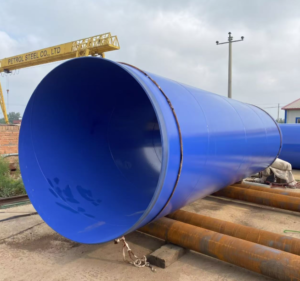
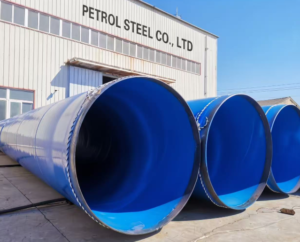
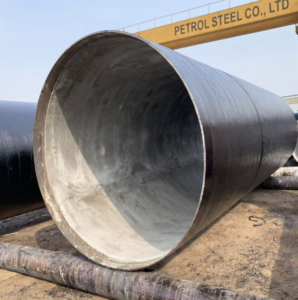
The two systems are physically very different. Cement mortar is a cementitious layer several millimeters thick, spun or placed onto the bore. Epoxy lining is a thin thermoset film, often between 0.35 mm and 1.0 mm for potable-water products, bonded to blast-cleaned steel. That difference in thickness drives most of what follows.
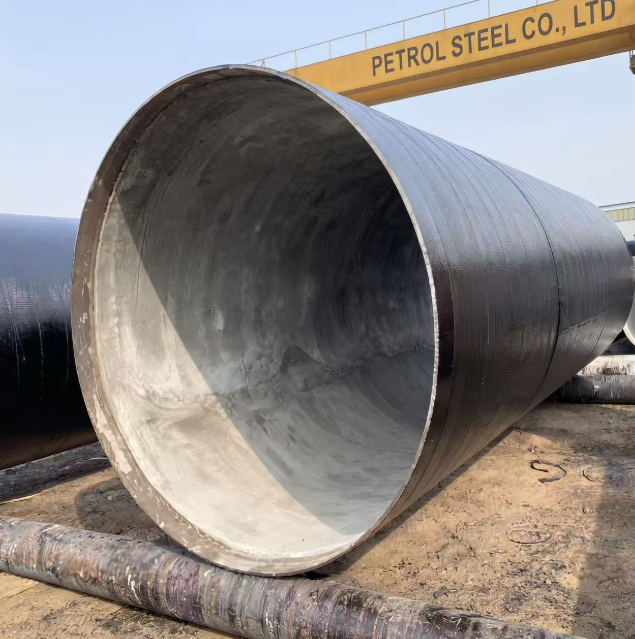
A thicker lining takes bore away from the pipe. On the same nominal size, mortar leaves a slightly smaller flow area than a thin epoxy film. The surface also differs. Mortar can show pinholes, small honeycombing, and fine shrinkage lines, while a well-applied epoxy surface is smooth and continuous.
Designers usually reflect this by assuming a better roughness value for epoxy in the hydraulic model. Over a long transmission main, the pumping energy saved can be meaningful, so ask your hydraulic engineer to run both options before the lining is fixed.
Cement mortar deserves its reputation when it is made and handled well. When it does crack, the cause is usually one of three:
- Thermal shrinkage. Cement hydration releases heat and creates temperature differences. If the shrinkage that follows exceeds what the mortar can stretch, a crack opens.
- Drying shrinkage. As mixing water leaves the mortar, it contracts, and poor curing makes this worse.
- Load deformation. When a steel pipe ovalizes under external load, the stiff lining must follow, and it is pulled in tension.
Hairline cracks are not automatically a defect, because mortar in contact with water can partly seal itself. Wide cracks, hollow-sounding areas, or fallen pieces after transport are a different matter and should be written into your acceptance criteria.
Mortar lining needs controlled curing. Pipe ends are normally sealed to keep the lining moist, and strength develops best at moderate temperatures with high humidity over several days. Cold weather is difficult because water in the mix can freeze before it hydrates, while extreme heat dries the surface too fast. On very large diameters, the mortar is often applied by hand, so workmanship varies more from joint to joint.
An epoxy coating plant follows a different cycle: blasting, application, cure, and cooling. Once cooled, pipes can be loaded within hours, and the schedule is far less sensitive to ambient conditions. When delivery dates are tight or liquidated damages apply, that predictability matters.
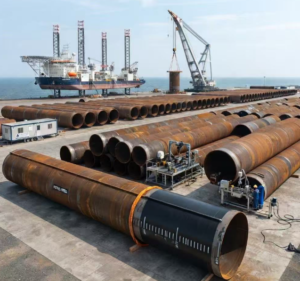
Jacking punishes rigid linings. As a pipe string is pushed through the ground, bending and local crushing can crack or dislodge mortar. Epoxy systems are normally qualified by adhesion, bend, and impact tests, so they tolerate movement better, although they still need protection from gouging.
For casing and jacking strings that carry structural load, engineers often specify structural-grade spiral welded pipe under EN 10219. Treat the lining inside and the structural pipe outside as two separate decisions with two separate clauses.
Both linings can serve potable water, but the paperwork differs. Mortar is made of sand and cement, is inorganic, and has a long record in drinking-water mains. Epoxy linings must come from a product with a recognized drinking-water approval. On international tenders, reviewers usually look for NSF/ANSI 61 or whatever the local authority names. Ask for the certificate covering the exact product and batch, not a generic brochure.
| Factor |
Cement mortar lining |
Epoxy lining |
| Typical thickness |
Several millimeters |
Fraction of a millimeter to about 1 mm |
| Bore and roughness |
Slightly reduced, rougher |
Minimal loss, smoother |
| Transport and jacking |
Higher cracking risk |
Better tolerance |
| Weather sensitivity |
High during curing |
Low |
| Upfront cost |
Usually lower |
Usually higher |
| Temperature limit |
Often higher |
Product-specific; check datasheet. |
| Hygiene proof |
Inorganic, long history |
Needs potable approval |
Reading procurement discussions on LinkedIn and Facebook engineering groups, three worries keep returning: coatings that peel, linings that arrive damaged, and quotations that cannot be compared. All three come from vague specifications, not from the lining material itself. Buyers who define test methods, acceptance limits, and joint treatment in advance receive comparable offers and far fewer surprises at the port.
A very common mistake is mixing the pipe standard with the coating standard. The pipe standard controls grade, wall thickness, and pressure rating. The lining or coating standard controls surface preparation, film thickness, and testing. For cement mortar, AWWA C205 is the usual reference. For fusion-bonded epoxy, buyers often cite AWWA C213, and our page on FBE coating applied to spiral welded water pipe shows how that specification is applied in practice.
A strong clause names the pipe standard and grade, the outside diameter and wall thickness, the lining type and minimum thickness, the surface preparation level, and the test regime, including thickness checks along the weld seam, holiday testing, and adhesion. It should also cover joint treatment, hygiene approval, and third-party inspection. Joints deserve special attention. Mortar joints are normally closed by hand after welding, while epoxy-lined pipe leaves uncoated ends that need a qualified joint coating. Either way, budget for joints in cost and schedule, because that is where most lining problems begin.
Cement mortar remains a sound choice for many buried mains in moderate climates, especially at larger bores and tighter budgets. Epoxy pulls ahead where flow efficiency, rough handling, trenchless installation, cold-season production, or tight schedules dominate. The best decision comes from the installation method and site conditions, not from habit.
Send your diameter, wall thickness, installation method, and destination climate to PETROL STEEL CO., LTD. through our inquiry page or at sales@petrolsteel.com, and our technical team will help you frame the lining clause.
Is epoxy-lined steel pipe safe for drinking water?
Yes, when the epoxy product holds a recognized drinking-water approval and is applied and cured as the manufacturer specifies. Ask for the approval certificate and batch test records. Incomplete curing is a common cause of taste or odor complaints.
Is a hairline crack in cement mortar lining a reason to reject pipe?
Not by itself. Fine cracks can seal once water contacts the mortar. Reject or repair when cracks are wide, when the lining sounds hollow, or when pieces have fallen out. Agree on these limits in the purchase specification so there is no argument at the port.
Which lining is better for pipe jacking?
Epoxy usually copes better because it is thin and bonded, while a rigid mortar layer can crack when the string flexes. Whichever you choose, define maximum jacking force, protect the joints, and plan lining repair at each joint.
Do epoxy linings peel off after a few years?
Peeling is almost always traced to poor surface preparation, contamination, or incomplete cure, not to the epoxy itself. Request blast cleanliness records, holiday test results, and adhesion data for your actual batch.
Can epoxy lining handle hot water?
It depends on the product. Some potable-grade systems are rated lower than cement mortar, so check the datasheet for hot water, desalination brine, or industrial service before you finalize.
What should a supplier send with a quotation?
At minimum: pipe standard and grade, lining type and thickness, surface preparation method, test list, EN 10204 3.1 material certificates, an inspection and test plan, hygiene approval, and a sample test report.