Incoloy 825 round bar to ASTM B425: what you are buying
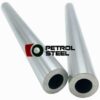
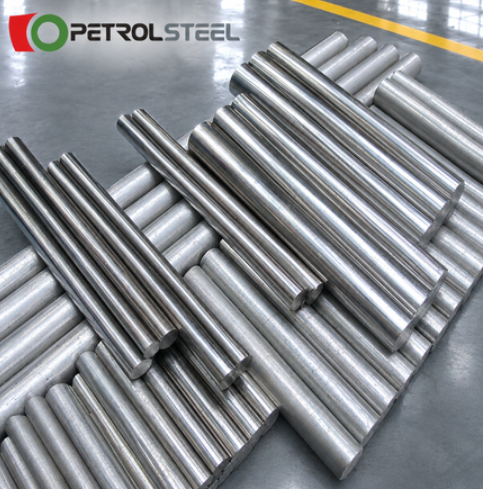
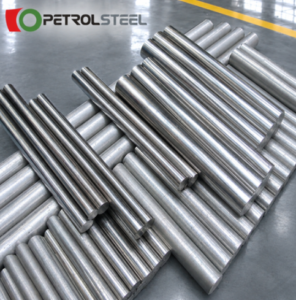
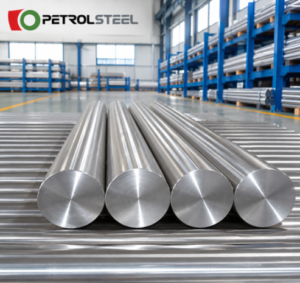
PETROL STEEL CO., LTD. supplies ASTM B425 Incoloy 825 round bars in UNS N08825 (W.Nr. 2.4858), together with square, hexagonal, and flat bars, in hot-finished and cold-drawn forms. The standard calls for a round solid section in straight lengths of a rod and a square, hexagonal, or rectangular section bar; flats count as bars up to 10 in (254 mm) wide and 1/8 in (3.2 mm) or more thick. Material is delivered annealed, with a surface that ranges from hot-worked black to pickled, rough-ground, or rough-turned, and every lot ships with a manufacturer’s certification, which the 2026 edition of B425 now makes mandatory. Buyers come to us for pump shafts, valve stems, fasteners, and machined parts that must survive sulfuric acid, phosphoric acid, seawater, or sour hydrocarbon service. This page sets out what the current edition requires, which condition and finish to choose, and what to put on the purchase order so the bar arrives ready to machine instead of ready to argue about.
| Item | Specification |
|---|---|
| Standard | ASTM B425-26; ASME SB-425 for code work |
| Grade | Incoloy 825 / Alloy 825, UNS N08825 (W.Nr. 2.4858) |
| Sections | Round (rod), square, hexagon, flat (rectangular) bar |
| Size | Cold-drawn from 1/16 in (1.6 mm); hot-finished and rough-turned up to 12 in (305 mm), per the tolerance and allowance tables |
| Length | Random, multiple, nominal, or cut lengths; 6–24 ft (1.83–7.31 m) hot-worked random |
| Condition | Annealed, forging quality (no tensile requirement) |
| Finish | Hot-worked, pickled, rough-ground, rough-turned, spot-ground; cold-worked, annealed, and pickled |
| Tests | Chemistry and tension per lot; PMI, UT, ASTM G28 Method A on request |
| Documents | Manufacturer’s certification and test report; EN 10204 3.1; SGS/BV/TUV inspection |
| Packing | Bundles or wooden cases, end-capped, heat-number marked |
What B425-26 covers and what changed in the 2026 edition?
B425 covers four nickel-iron-chromium-molybdenum-copper alloys, UNS N06845, N08221, N08825, and N08827, as hot-finished and cold-drawn rounds, squares, hexagons, and rectangles. N08825 is the grade most buyers mean by Incoloy 825 or Alloy 825, so make sure the purchase order names the UNS number as well as the trade name. The current edition, B425-26, was approved on 1 April 2026 and replaces the 2019 edition. Its summary of changes lists a revised lot definition, a revised chemical requirements table, a revised note on cold-worked rod for forging, and, most relevant to procurement, mandatory certification. Inch-pound values are the standard; SI figures in parentheses are conversions for information. For pressure-vessel work under the ASME Boiler and Pressure Vessel Code, the matching specification is SB-425 in Section II. Hot-worked rectangular bars 10 in (254 mm) wide or narrower may also be furnished as hot-rolled plate with sheared or cut edges to B424 if they meet the mechanical requirements, which is worth knowing when flat stock is short.
Chemistry and mechanical properties of UNS N08825 bar
For N08825, Table 1 of B425 sets nickel at 38.0 to 46.0 percent, chromium at 19.5 to 23.5, iron at 22.0 minimum, molybdenum at 2.5 to 3.5, copper at 1.5 to 3.0, titanium at 0.6 to 1.2, carbon at 0.05 maximum, manganese at 1.0, silicon at 0.5, sulfur at 0.03, and aluminum at 0.2 maximum. An annealed hot-finished and cold-drawn bar must reach a minimum tensile strength of 85 ksi (586 MPa) and a minimum yield strength of 35 ksi (241 MPa) at 0.2 percent offset and 30 percent elongation; the elongation requirement does not apply below 3/32 in (2.4 mm) diameter or section. Forging quality rod is different: it is supplied against chemistry and surface inspection only and carries no tensile requirement, so do not expect a tensile result on that certificate. Specimens are taken from the finished condition in the direction of fabrication and tested full-section when possible. In service, the chemistry does the work: nickel for chloride stress-corrosion resistance, molybdenum and copper for reducing acids, chromium for oxidizing media, and titanium to stabilize against sensitization after welding.
Choosing condition and finish: Appendix X1 in plain terms
Appendix X1 lists the conditions in which the bar is procured, and choosing the right one saves machining time. Hot-worked annealed bar is soft with a tightly adherent dark oxide. Hot-worked, annealed, and pickled bar has the mill oxide removed, which allows better surface inspection, so it is the usual choice where welding is involved. Rough-ground and rough-turned variants suit machined parts; the rough-turned bar is cut with a broad-nosed tool similar to bar peeling, so it may not be straight, and it is intended mainly for step-down shafts or parts machined in lengths of 3 ft (0.91 m) or less. Hot-worked forging quality rod is rough-turned and spot-ground at 1 in (25.4 mm) and over, and rough-ground and spot-ground under 1 in, with spot grinding no deeper than 3 percent of the diameter, selected from heats of known good hot malleability. A cold-worked, annealed, and pickled bar is straightened and descaled with a dull matte finish and gives the tightest tolerances. For forging, the standard advises pilot forging tests and notes that a cold-worked rod up to 2 1/2 in (63.5 mm) may be used if mechanical surface defects were removed before cold working.
Tolerances, straightness, lengths, and machining allowance
Cold-worked round tolerances run from zero plus and 0.002 in (0.05 mm) minus on rod from 1/16 in up to but not including 3/16 in, to plus 0.002 in (0.05 mm) and minus 0.004 in (0.10 mm) on rod over 1 15/16 in up to 2 1/2 in. Hot-worked rods and bars of 1 in (25.4 mm) and under carry plus or minus 0.016 in (0.41 mm), while sizes over 4 in (101.6 mm) allow plus 0.125 in (3.18 mm) and minus 0.063 in (1.60 mm); rough-turned or ground rods under 1 in are held to plus or minus 0.005 in (0.13 mm). Out-of-round may not exceed half the total diameter variation. Straightness for cold-worked rod is 0.030 in (0.76 mm) depth of chord per foot (305 mm), and for hot-worked bar 0.050 in per foot (4.2 mm per meter). Random mill lengths are 6 to 24 ft (1.83 to 7.31 m) hot-worked and 6 to 20 ft (1.83 to 6.1 m) cold-worked, and cut lengths are held to plus 1/8 in (3.2 mm), minus zero, up to 8 in (203 mm), and plus 1/4 in (6.4 mm) above. If you will machine the bar, state the finished dimension and length: the standard’s recommended allowance is 1/8 in (3.2 mm) on diameter for hot-worked rod up to 7/8 in (22.2 mm) and 1/16 in (1.6 mm) for rough-turned or ground rod from 15/16 to 4 in, valid for pieces machined in lengths of 3 ft (0.91 m) or less. Longer pieces need extra oversize for out-of-straightness.
Testing, lots, certification, and marking
B425 requires one chemical analysis per lot and one tension test per lot. A chemistry lot is defined as one heat, while a tension lot consists of all material from the same heat, nominal diameter or thickness, and condition. If the material cannot be identified by heat, a lot is limited to no more than 500 lb (227 kg) of one size and condition. The test methods are ASTM E1473 for chemistry, E8/E8M for tension, and E29 for rounding. A manufacturer’s certification stating that the material was manufactured, tested, and inspected to the specification, with the test results, is mandatory in this edition. Marking must show the name or UNS number, heat number, condition, specification number, size, gross, tare, and net weight, consignor and consignee, and the contract or order number. Purchaser inspection is by agreement, so please specify any witness points when placing your order. Beyond the standard, we offer EN 10204 3.1 certificates, 100 percent PMI, ultrasonic examination, and intergranular corrosion testing to ASTM G28 Method A, and SGS, BV, or TÜV witnessed inspection. We recommend PMI and a hardness check on any bar destined for sour service.
Where Incoloy 825 bar is used and the markets we serve
The largest uses are shafts, valve stems, pump parts, fasteners and studs, and machined components for sulfuric and phosphoric acid plants, fertilizer complexes, pickling lines, flue-gas desulfurization units, and heat exchangers handling chloride-bearing water. Offshore platforms and FPSO topsides use Incoloy 825 bar for seawater, produced water, and chemical injection equipment, while nuclear fuel processing lines specify the alloy for use in environments where nitric acid is present. As an Alloy 825 bar manufacturer and exporter, we supply EPC contractors, OEMs, and maintenance buyers across the Middle East, Southeast Asia, Europe, Africa, and the Americas. A frequent opportunity is the spare-parts order: a 316 or duplex shaft has corroded in service, and the owner needs a like-for-like replacement with a clean certificate before the shutdown ends. For higher strength or hotter, more aggressive services, compare our ASTM B446 AMS 5666 UNS N06625 Round Bar Rod and ASTM B574 Hastelloy C276 Round Bar UNS N10276 Rod pages.
Request a quote for an Incoloy 825 round bar.
Send OD, WT, grade & quantity. For bar, that means diameter or across-flat dimension, section (round, square, hex, or flat), length (random, nominal, or cut), condition and finish from the options above, ASTM B425 UNS N08825, quantity in kilograms or pieces, and destination port. Tell us whether the bar will be machined, forged, or welded, because that decides the condition we recommend, and give the finished machined size if you want the allowance checked. Add the certificate and inspection you require, such as EN 10204 3.1, PMI, or witnessed testing. Our sales engineers review every inquiry before it goes to pricing, so we raise unclear requirements with you at the start rather than after the order. A typical response includes a firm price, a delivery plan, the certificate list, and a packing proposal. MOQ and lead time depend on size, condition, and heat availability, and we confirm them in writing with the quotation. PETROL STEEL CO., LTD. welcomes first-time buyers and project inquiries of any size.
Inquiry box: Send OD, WT, grade & quantity—or diameter, length, condition, and quantity for the bar—and we reply with a quotation.
Incoloy 825 round bar FAQ (Top 8)
- What is the difference between ASTM B425 and B564 for Incoloy 825? B425 covers rod and bar; B564 covers forgings. The alloy is the same UNS N08825, but the product form and requirements differ.
- What are the minimum mechanical properties of annealed N08825 bar? Tensile strength 85 ksi (586 MPa), yield strength 35 ksi (241 MPa) at 0.2 percent offset, and elongation 30 percent, except under 3/32 in (2.4 mm).
- Which UNS numbers does ASTM B425 cover? UNS N06845, N08221, N08825, and N08827. Incoloy 825 is N08825.
- What does forging quality mean in B425? Forging quality rod is supplied for chemistry and surface inspection only. No tensile properties are required.
- Should I order hot-worked or cold-drawn bar? Cold-drawn gives tighter tolerances and a matte, pickled surface. Hot-worked suits larger sizes and parts that will be machined, with the allowance stated in Table 5.
- Is certification required under B425? Yes. The 2026 edition makes a manufacturer’s certification with a test results report mandatory. We also issue EN 10204 3.1 certificates.
- How much machining allowance should I order? For hot-worked rods up to 7/8 in (22.2 mm) on diameter; for rough-turned or ground rods from 15/16 to 4 in, 1/16 in (1.6 mm); and for pieces machined in lengths of 3 ft (0.91 m) or less.
- What do you need for an accurate quote? Send OD, WT, grade & quantity. For the bar, add the section, length, condition, finish, intended use, certificates, and destination port.