Explosion Bonded Clad Plates Supplier for Oil & Gas & Petrochemical EPC Projects
Reliable Corrosion Resistant Material Solutions from PETROL STEEL
Finding a good Explosion Bonded Clad Plates supplier is more than just product availability for international EPC contractors, engineering procurement teams, and project buyers. Material traceability, corrosion performance, inspection capability, documentation control, and long-term supply reliability are the key factors for project evaluation.
Explosion Bonded Clad Plates (Explosion Welded Clad Plates) are one of the main products in our Prefabricated Piping & Pipe Spools category supplied by PETROL STEEL CO., LTD. The product supports global Oil & Gas, Petrochemical, Offshore, Energy, and industrial applications where corrosion-resistant materials are required for pressure equipment, process systems, and heavy industrial fabrication.
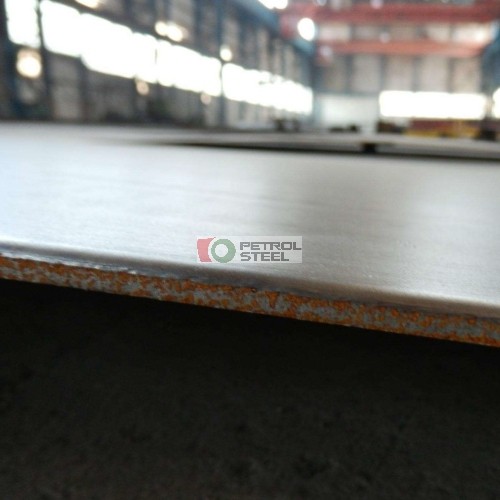
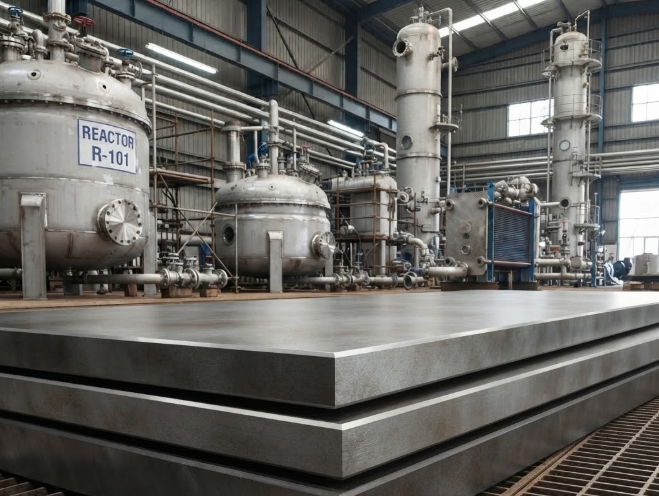
Explosion Bonded Clad Plates , are an alternative composite material to the traditional steel plate. They provide the structural strength and cost effectiveness of carbon or low-alloy steel combined with the corrosion resistance of premium Corrosion Resistant Alloys (CRA). This combination helps EPC contractors and equipment manufacturers to extend service life and optimize material costs in severe operating environments.
PETROL STEEL’s Explosion Bonded Clad Plates are offered for use in pressure vessels, reactors, heat exchangers, storage equipment, offshore facilities, chemical processing equipment, and other corrosion-critical industrial systems. Common material combinations are carbon steel or alloy steel backing plates bonded to stainless steel, nickel alloys, titanium, and other corrosion-resistant materials depending on project requirements.
What Are Explosion Bonded Clad Plates?
Explosion Bonded Clad Plates are high-performance bimetallic composite plates manufactured by a high-energy solid-state bonding process. Explosion welding creates a strong metallurgical bond between dissimilar metals without the use of conventional fusion welding. The explosive force is controlled to drive the cladding material against the backing plate at a high velocity.
The original chemical characteristics of the CRA layer are retained as the process does not involve melting of the base materials. This preserves the corrosion-resistance properties of the cladding material, while the backing steel fulfills the mechanical strength and pressure-bearing requirements.
Economical alternative to solid alloy plates: Explosion Bonded Clad Plates provide corrosion-resistant materials only where required and the structural performance of the backing metal.
Technical Specifications
Material
PETROL STEEL supplies Explosion Bonded Clad Plates with different material combinations as per engineering requirements and project specifications.
Carbon Steel:
ASTM A516 Grade 60 / Grade 70
ASTM A36
ASTM A537 Class 1 / Class 2
Low Alloy Steel:
ASTM A387 Grade 11
ASTM A387 Grade 22
ASTM A387 Grade 91
High-yield structural steel and offshore grades as per project requirements
Stainless Steel Austenitic:
304 / 304L 316 / 316L 321 317L 904L
Duplex Stainless Steel:
UNS S31803 (2205) UNS S32750 (2507)
Nickel-Base Alloys
Alloy 625, Alloy 825, Alloy C-276, Monel 400
Special Corrosion-Resistant Materials:
Titanium, Zirconium, Copper, and Copper-Nickel Alloys.
Fabrication Process
Explosion Bonding / Explosion Welding Process
Explosion Bonded Clad Plates are manufactured through a controlled solid-state bonding process.
The main processes are:
– Surface preparation of backing steel and cladding
Accurate positioning of composite plates
– Detonation of controlled explosives; impact welding at high velocity
– Metallurgical wave-form interface generation
Explosion welding is a proven process for joining dissimilar metals. It is used in applications where conventional welding processes cannot provide the required material performance.
The configurations available are:
– One-sided Clad Sheets- Double-Sided Clad Plates
– Composite Plates Custom Made
Plate sizes and configurations can be supplied to customer drawings, equipment design requirements, and EPC project specifications.
Inspection & Quality Control
PETROL STEEL understands that EPC projects require full quality assurance and traceability.
Explosion Bonded Clad Plates can be supplied with: – Chemical Composition Examination – Mechanical Properties Testing – Dimensional Inspection
Check Surface Quality
Bond Interface Inspection
Ultrasonic Testing (UT) – Positive Material Identification (PMI)
Bond Test, Mechanical
Material Certificates EN 10204 3.1 / 3.2
Third-party inspection can be arranged as per the customer’s requirements, including the inspection agencies of SGS, BV, DNV, and TÜV.
Supply Capability, Delivery Time & Project Support
PETROL STEEL exports and supplies Explosion Bonded Clad Plates for international engineering, procurement, and construction projects. We provide project-specific combinations of materials, review technical specifications, coordinate inspection, and arrange export documentation and international shipment.
For international shipments, PETROL STEEL arranges export seaworthy packaging, surface protection, shipping arrangements, and relevant product documentation as per the confirmed purchase order. This approach allows EPC contractors, pressure vessel fabricators, and project procurement teams to manage the material sourcing and delivery requirements within their project schedules.
Quality Assurance & Documentation
Quality assurance for Explosion Bonded Clad Plates is not only about inspection of the finished plate. The buyers shall confirm that the bonded interface meets the applicable acceptance criteria, that the backing steel and cladding material are identical to the purchase specification, and that the inspection records are compliant with the project documentation requirements.
PETROL STEEL has an internal QC inspection process on every order and coordinates third-party inspection when required by the customer or project specification. The scope of inspection will be agreed upon by both parties and may include, but not be limited to, material and grade verification, dimensional and surface inspection, bond integrity testing, mechanical testing, and review of applicable inspection records. Mill test certificates EN 10204 3.1 or 3.2 are available on request and can be cross-checked with order requirements. The special tests, the acceptance criteria, and the involvement of the inspection agency shall be agreed upon prior to order placement.
Our technical team has more than 10 years of industry experience; our international trade and marketing team has more than 20 years of experience; our QC team members have more than 10 years of inspection experience; and our logistics team members have more than 15 years of experience. PETROL STEEL has more than 10 years of experience in the export of Explosion Bonded Clad Plates, and we have zero customer claims in the history of products and services covered by this business. Our goal is to provide products that meet the purchase order and inspection requirements, with open communication and responsible quality control.
Applications Across Oil & Gas, Petrochemical & Industrial Projects
Explosion Bonded Clad Plates are used where the equipment requires the structural properties of a backing steel and the corrosion resistance of a selected cladding alloy. They can be used in pressure vessels, separators, gas processing equipment, and sour service equipment exposed to corrosive media in the Oil & Gas industry. The material selection for service in the presence of hydrogen sulfide (H₂S), carbon dioxide (CO₂), or chlorides must be validated against actual operating conditions, design requirements, and applicable standards.
Clad plates may be specified for reactors, process vessels, scrubbers, storage equipment, and other equipment exposed to corrosive process fluids in petroleum refining and petrochemical processing. In heat exchangers and power generation equipment, the composite structure can provide a corrosion-resistant surface for process contact whilst the backing material still contributes to its structural strength. The real applicability of any material combination is subject to temperature, pressure, fluid composition, corrosion allowance, and fabrication requirements.
Other applications are in offshore & marine engineering, FPSO facilities, seawater desalination, chemical processing, mining, and metallurgical equipment. For each project, the EPC engineers shall confirm the required alloy grade, cladding thickness, backing plate specification, bonding inspection criteria, and fabrication compatibility before final material selection. PETROL STEEL is assisting with the procurement process by helping to coordinate technical reviews and sourcing arrangements with qualified manufacturing partners.
Why EPC Buyers Work with PETROL STEEL
When choosing an international supplier, you must look not only at the product but also at the supplier’s ability to communicate technically, provide quality documentation, coordinate inspections, and deliver. PETROL STEEL combines product sourcing and project-oriented export support to enable buyers to meet these requirements through a single, coordinated commercial interface.
Our experienced technical, international trade, QC, and logistics teams support our customers from initial RFQ review, order follow-up, and shipment coordination. We focus on confirming requirements before quoting, clarifying inspection and documentation expectations, communicating delivery schedules, and coordinating corrective actions if discrepancies are found. Internal QC and third-party inspection arrangements provide further verification as per the purchase order, and the final acceptance is subject to the applicable specifications and inspection results.
For buyers trading in multiple corrosion-resistant materials, Explosion Bonded Clad Plates are a complement to PETROL STEEL’s wider supply portfolio. We offer CRA Clad & Weld Overlay Piping products for piping applications and clad plates for equipment and vessel fabrication. The separation of these product applications enables engineering and procurement teams to find the right supply category and not confuse plate products with clad pipes or weld-overlay components.
RFQ Requirements for Explosion-Bonded Clad Plates
Please provide the following information where available to allow us to prepare a correct technical and commercial quotation.
| RFQ Item | Information Requested |
| Product | Explosion-Bonded Clad Plates |
| Base Material | Grade and applicable material specification |
| Cladding Material | Alloy grade and material specification |
| Plate Dimensions | Length × width × total thickness |
| Cladding Thickness | Required thickness and configuration |
| Quantity | Number of plates or total weight |
| Applicable Standards | ASTM / ASME / API / project-specific requirements |
| Inspection | UT, mechanical tests, PMI, third-party inspection, and acceptance criteria |
| Documentation | Required MTC, inspection reports, and traceability records |
| Delivery | Required delivery date and destination port or delivery location |
| Project Requirements | Drawings, datasheets, technical specifications, and inspection test plan, if available |
Material specifications, dimensions, quantity, and inspection requirements at the RFQ stage reduce clarification cycles and allow the supply team to better assess feasibility, documentation, and delivery.
Request a Technical & Commercial Quotation
Send Your Drawing or RFQ → PETROL STEEL Technical Team Review → Technical & Commercial Quotation
Contact PETROL STEEL CO., LTD. for your Explosion Bonded Clad Plates requirements for Oil & Gas, petrochemical, offshore, energy, or industrial equipment projects. Please send us your material grade(s), plate sizes, quantity, standard, inspection requirements, and desired delivery date. The information you provide will be checked by our team, and a quotation will be arranged according to the scope of the technical and commercial scope.