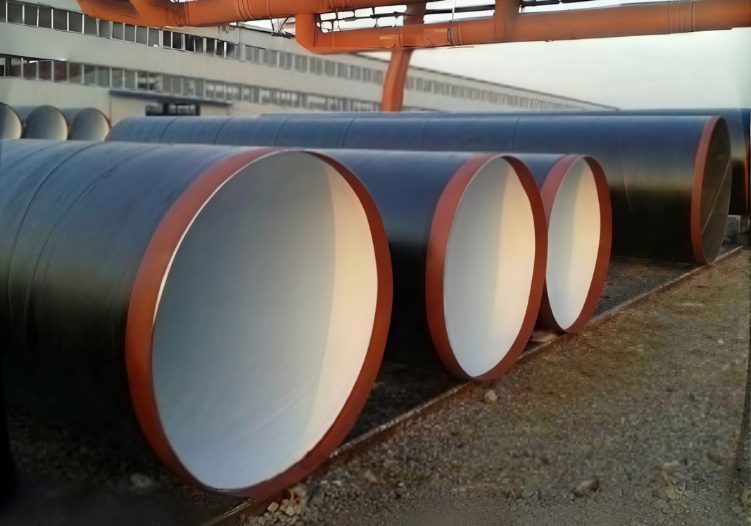
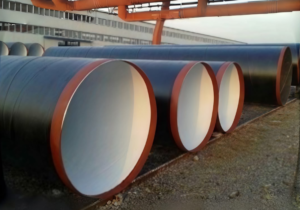
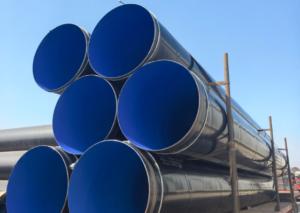
When EPC procurement teams and municipal water authorities issue tenders for large-diameter transmission mains, they are not just buying steel pipe. They are buying a system where the base pipe, the fusion-bonded epoxy coating, the lining, the mill certifications, and the inspection records must all align. After fifteen years in this industry, I can tell you that the single biggest reason projects suffer coating failures, rejected shipments, or delayed commissioning is that the RFQ mixed up the pipe standard with the coating standard. AWWA C213-22 defines the FBE coating and lining system only. It does not define pipe grade, wall thickness, pressure rating, or flange geometry. Your base pipe must be specified separately—AWWA C200 for water transmission and API 5L PSL1 or PSL2 for oil and gas gathering. At PETROL STEEL CO., LTD, we manufacture and supply AWWA C213 FBE coated SSAW spiral welded pipe with full traceability from steel coil to coated pipe, and we help you write an RFQ that gets comparable, compliant quotations the first time.
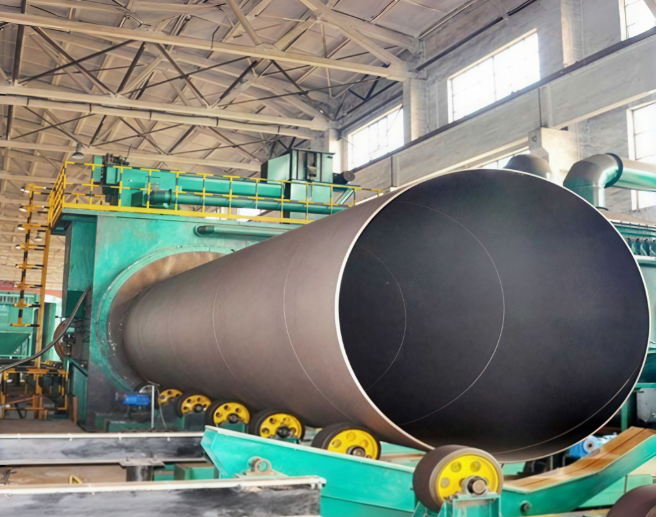
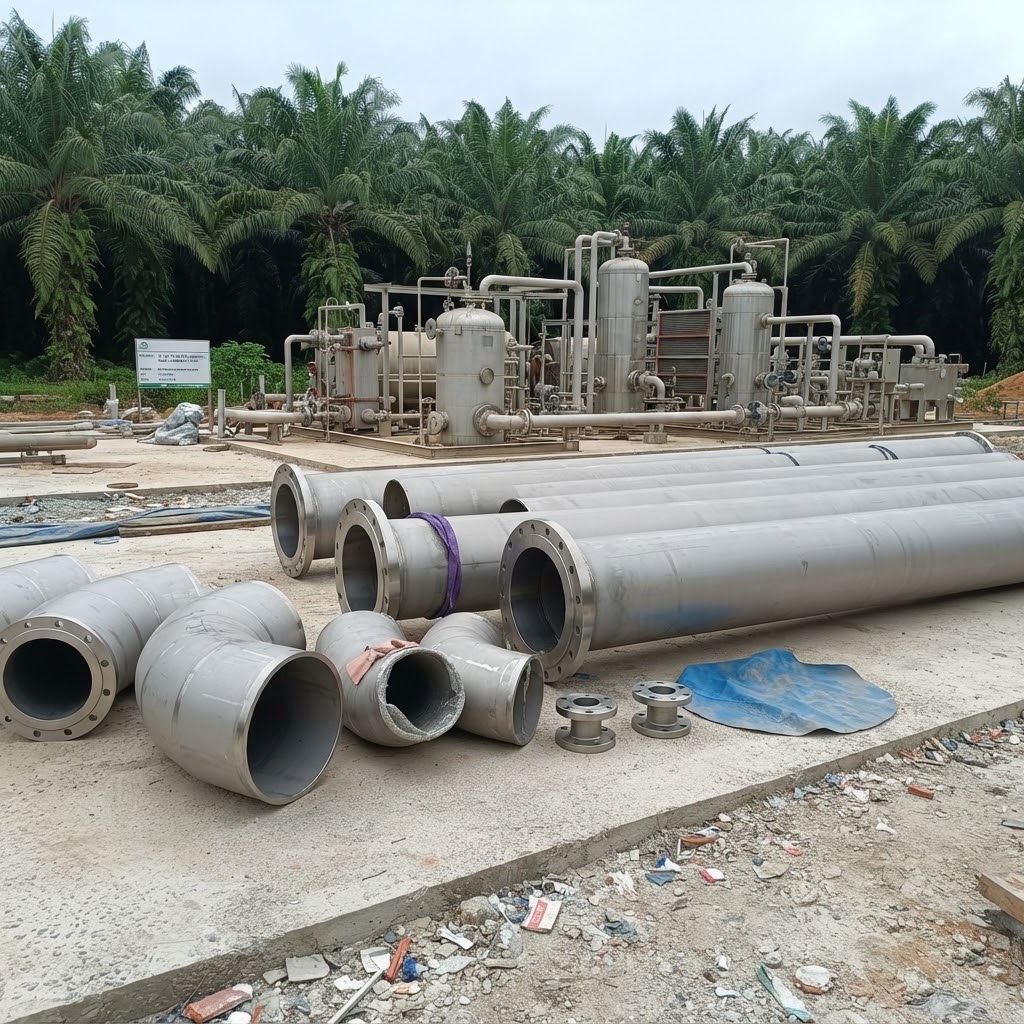
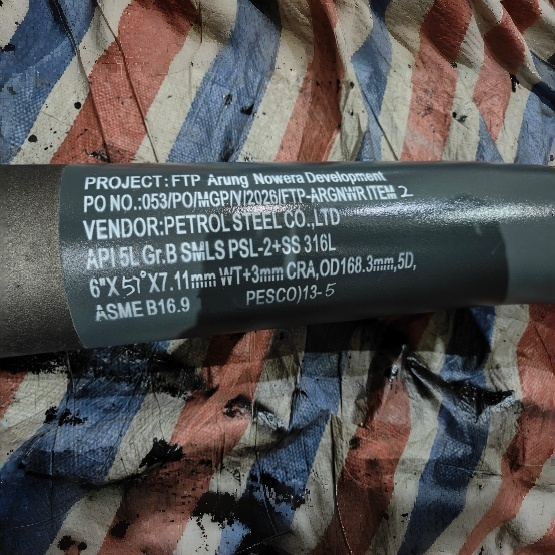
The submerged arc spiral welded manufacturing route gives you a significant advantage on large diameters and long lengths. Our SSAW lines produce pipes from DN200 to DN3800 (8″ to 152″) with wall thicknesses from 5 mm to 25 mm and single lengths up to 12 meters. Base pipe grades cover ASTM A53 Grade B, API 5L Grade B through X70, and equivalent ISO 3183 grades. Every pipe is formed on full-process roller conveyor lines, welded with automatic twin-arc submerged arc welding, and tested through 100% hydrostatic pressure testing, automatic ultrasonic testing, and visual and dimensional inspection. We issue EN 10204 3.1 mill test certificates as standard. For buyers in North America, the Middle East, Southeast Asia, and South America, this means you can present a complete material package to your engineering reviewer, insurer, or end user without scrambling for missing mill docs two weeks before shipment.
FBE coating quality lives or dies at the surface preparation stage. For spiral welded pipe, the helical weld seam creates a geometry that demands extra attention. Before any epoxy powder touches the steel, we perform abrasive blast cleaning to near-white metal (Sa 2.5). minimum), verify the anchor profile, and inspect the weld bead profile. The internal and external FBE coating is then applied by electrostatic fusion-bonded epoxy spraying at controlled stoving temperatures. Dry film thickness is measured continuously, including along the spiral weld seam and both pipe ends. Minimum DFT follows AWWA C213-22 and your project specification; a commonly referenced minimum is approximately 305 µm (12 mil) for single-layer FBE, subject to the edition and grade you specify. Each coated pipe undergoes holiday (spark) testing, adhesion testing, and, where required by the project, cathodic disbondment testing per ASTM G8 or ASTM G42. For dual-layer FBE, we apply a corrosion-resistant base layer followed by an abrasion-resistant top layer in a single pass, producing total thicknesses from 600 µm to 800 µm depending on the grade. This is the system we recommend for river crossings, road crossings, and horizontal directional drilling sections where pull-through damage is a real risk.
Field joint coating and repair are where many projects get into trouble, because FBE is a heat-cured system and cannot simply be brush-applied on site without qualification. We address this upfront. Every order includes uncoated field-weld cutbacks at both pipe ends, typically 50 mm to 150 mm depending on the welding procedure. Along with the pipes, we supply a field joint coating and repair plan that lists approved materials, application procedures, and cure verification methods. Repair kits are packed per shipment with traceable batch numbers. For EPC contractors working under third-party inspection regimes, we coordinate with SGS, Bureau Veritas, TÜV, or your nominated agency. Our inspection and test plan covers raw material re-inspection, weld seam NDT, hydrostatic testing, coating DFT and holiday testing, adhesion testing, and packing inspection. You receive a complete dossier before the pipes leave the coating plant, not after they arrive at your port.
There are three forces shaping the latest international market for AWWA C213 FBE coated SSAW pipe that all buyers should consider when making their sourcing decision. First, demand continues to be driven by the replacement of potable water infrastructure, especially in North America with the US Infrastructure Investment and Jobs Act, where municipalities are replacing old cast iron and bare steel mains with coated spiral welded lines. Secondly, the Middle East and Africa are progressing with large-scale desalination and transmission projects in hot, saline, sandy environments—conditions that demand proven FBE adhesion, high-temperature grade validation, and proven cathodic disbondment resistance. Third, standards discipline is tightening: ISO 21809-2 was revised in February 2026, and EPC reviewers are combing through every document to make sure that they cite the correct edition of the standard. PETROL STEEL CO., LTD keeps these changes up-to-date and reflects them in our specifications, keeping your project compliant and your bid competitive.
Our positioning is straightforward and transparent. PETROL STEEL CO., LTD is a professional global pipeline supplier and project support partner. We operate as an integrated supply and quality-management organization working with audited, certified partner mills and coating facilities across China. We do not claim to own every production line, and we do not need to. What we own is the supply chain coordination, the quality surveillance, the documentation package, and the commercial framework that gets project-critical pipe to your site. For AWWA C213 FBE-coated SSAW spiral welded pipe, this means you get one accountable point of contact from technical clarification through to the loaded container. Your order is managed by a dedicated team that includes a technical coordinator, a QA/QC supervisor, a logistics handler, and a documentation specialist. When you ask “Who do I call if something is wrong?” The answer is one person who knows your project inside out.
We understand that every buyer evaluates differently. Some need the lowest total landed cost. Others need the fastest delivery to avoid liquidated damages. Many need a supplier who can navigate complex documentation requirements for World Bank–funded or ADB-funded projects. Our role is to listen first, then propose a supply solution that fits your priority. For large-diameter AWWA C213 FBE lined SSAW pipe, we routinely handle export shipments on FOB, CFR, CIF, and DAP terms. Typical minimum order quantities start from 25 metric tons, with lead times ranging from 4 to 6 weeks depending on grade, diameter, coating specification, and third-party inspection requirements. We have supported projects across water transmission mains, wastewater force mains, desalination intake and outfall lines, oil and gas gathering lines, irrigation systems, and river and road crossing sections. Each project gets a tailored inspection and documentation package matched to its risk profile.
If you are preparing an RFQ, a tender submission, or a budgetary estimate, send us your specification—even if it is incomplete. Tell us the standard, grade, outside diameter, wall thickness, length, coating or lining scope, destination port, and required delivery date. If you are unsure whether to specify single-layer FBE, dual-layer FBE, 3LPE, or liquid epoxy for field joints, describe your soil conditions, operating temperature, and installation method. We will review your requirements against AWWA C213-22, AWWA C200, API 5L, ISO 21809-2, NSF/ANSI 61, and any local approvals you need, then respond within 24 hours with a detailed quotation, MOQ, lead time, and a clear statement of compliance. PETROL STEEL CO., LTD. is built on the principle that superior quality, prompt delivery, and favorable feedback are not slogans—they are the minimum standard our clients should expect. Select PESCO, and you will be right.
Quick Reference: Specification Summary
| Parameter | Range / Detail |
| Product | AWWA C213 FBE Coated SSAW Spiral Welded Pipe |
| Base Pipe Standard | AWWA C200, API 5L PSL1/PSL2, ISO 3183 |
| Coating Standard | AWWA C213-22, ISO 21809-2:2026 |
| Lining Standard | AWWA C213-22 (internal FBE lining, min. 24″ / DN600 for inspectable lining) |
| Health Approval | NSF/ANSI 61 (potable water applications) |
| OD Range | DN200 – DN3800 (8″ – 152″) |
| Wall Thickness | 5 mm – 25 mm |
| Length | Up to 12 m (fixed or random) |
| Grades | Grade B, X42, X52, X60, X65, X70 |
| FBE DFT (single-layer) | Min. ~305 µm (12 mil), verify per edition |
| Dual-Layer FBE DFT | 600 – 800 µm total |
| Field Weld Cutback | 50 – 150 mm per end (uncoated) |
| Inspection | Hydrostatic, UT, RT, DFT, holiday, adhesion, cathodic disbondment |
| Third-Party Inspection | SGS, BV, TÜV, or client-nominated agency |
| MOQ | 25 metric tons |
| Lead Time | 4 – 6 weeks |
| Trade Terms | FOB, CFR, CIF, DAP |
| Documentation | EN 10204 3.1 MTC, ITP, NDT reports, coating test records |
FAQ
Q: What does “AWWA C213 FBE coated SSAW pipe” actually include, and which standards must I list in my RFQ?
A: C213-22 covers the FBE coating and lining only. You must list the pipe standard (AWWA C200 or API 5L), grade, OD × WT, coating or lining scope, and any health approval separately. Mixing these up is the most common reason RFQs return non-comparable quotes. Send us all of them and we will confirm compliance before quoting.
Q: How do you control FBE thickness over the spiral weld seam?
A: The helical weld bead can cause thin spots. We specify weld-bead profile and blast-profile checks before coating, then measure DFT along the seam as well as the pipe body. Minimum thickness follows C213-22 and your specification; a commonly cited minimum is about 305 µm (12 mil), which you should confirm in the standard.
Q: Is FBE lining safe for drinking water, and can it be used on small diameters?
A: Potable water linings must carry NSF/ANSI 61 approval. C213 sets a 24 in (610 mm) minimum for linings that must be inspected and repaired from inside the pipe. Below that size, lining needs an agreed inspection method. State your local approval requirement in the RFQ.
Q: How do I choose between FBE, 3LPE, liquid epoxy, and dual-layer FBE?
A: Single-layer FBE suits buried lines with controlled installation damage. Dual-layer or abrasion-resistant FBE is chosen for road crossings, river crossings, and HDD. 3LPE offers higher impact resistance on rocky routes; liquid epoxy is common for fittings and field joints. Send us soil, temperature, and installation method, and we will recommend a system.
Q: How are field joints and repairs qualified?
A: Pipe ends are left uncoated for field welding. Field joint coating and repair must be qualified separately. We supply a joint-coating and repair plan with approved materials and procedures, plus a kit list for each shipment.
Q: What documents and inspections do EPC reviewers expect, and what do you need for a quotation?
A: Typical submissions: ITP, EN 10204 3.1 mill certificates, welding and NDT records, hydrostatic test reports, coating inspection records (DFT, holiday, adhesion, cathodic disbondment), and packing details. For a fast quote, send standard, grade, OD × WT, quantity, coating and lining specification, destination port, and delivery date. We reply within 24 hours.
All standard edition numbers, test values, and acceptance limits should be verified against the purchased standard before use in contractual documents. Several figures above commonly appear in supplier technical literature, and you should confirm them against the current standard edition applicable to your project.