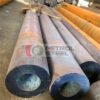
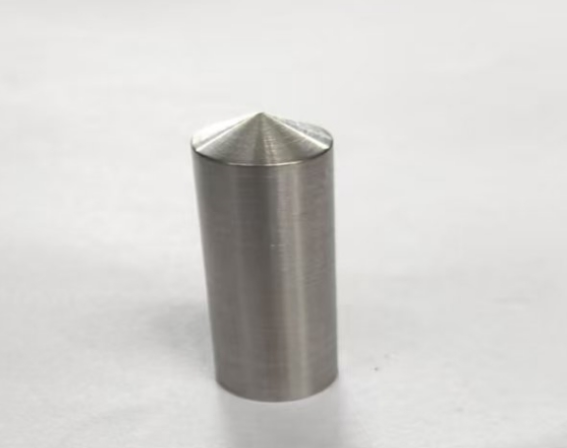
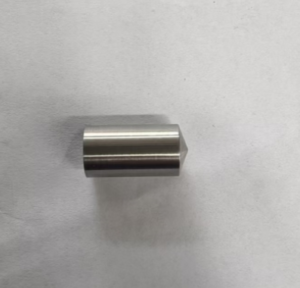
MA754 (UNS N07754) is an oxide-dispersion-strengthened nickel-chromium alloy with about 20% chromium and a fine yttrium oxide dispersion, designed for parts that must maintain strength, fatigue life, and shape above 1000°C. Petrol Steel Co., Ltd. supplies it as a forged bar and extruded round rod, made to order, with EN 10204 3.1 certification and optional third-party inspection.
Quick specification table
| Item | Detail |
| Alloy / UNS | MA754 ODS Ni-Cr-Y₂O₃ / UNS N07754 |
| Nominal chemistry (wt.%) | Ni balance · Cr ≈ 20 · Fe ≈ 1 · Al ≈ 0.3 · Ti ≈ 0.5 · Y₂O₃ ≈ 0.6 |
| Forms | Extruded round rod, forged bar, bar stock |
| Diameter | [ ] mm, subject to feasibility |
| Length | Random or cut-to-length [ ] m |
| Delivery condition | Heat-treated, ground, or machined [confirm] |
| Ends | Plain, saw-cut, or machined |
| Coating/surface | Bright-ground or pickled; no coating as standard |
| Certification | EN 10204 3.1 MTC |
| Inspection | PMI, UT, dimensional; third-party on request |
| MOQ / lead time | [ ] kg / [ ] weeks, confirmed per RFQ |
Why Buyers Choose MA754 Bar
Most alloys lose strength as temperature climbs, and the loss is steepest just where the part is working hardest. MA754 behaves differently. Its yttrium oxide particles do not dissolve or coarsen, so they keep holding the grain structure in place long after a conventional nickel alloy has begun to creep. That is why the grade was among the first oxide-dispersion nickel alloys to reach industrial production, and why it is still specified where a failed component means lost output rather than a cheap swap. For a wider overview of how this alloy family performs in demanding service, see our material solution for extreme environments. Petrol Steel Co., Ltd. supplies UNS N07754 bars to engineers and EPC buyers who have outgrown standard high-chromium nickel grades. We do not push it as a universal answer. We check the temperature, load, and atmosphere first, because the grade earns its price only in the right duty.
Chemical Composition & Technical Specifications
The alloy is nickel-based, with roughly 20% chromium, about 1% iron, 0.3% aluminum, 0.5% titanium, and 0.6% yttrium oxide. The aluminum is deliberately low. MA754 relies on a chromium-oxide scale rather than the alumina scale that iron-aluminum grades such as MA956 form, which is why the two are not interchangeable in every atmosphere. Strength comes from the dispersion, not from precipitates that can dissolve. In practice, this arrangement means usable properties persist toward very high temperatures, and the usual service window for nickel ODS alloys is roughly 1000 to 1350°C. For a closer look at what sets these properties apart from conventional nickel alloys, see our page on the breakthrough in material properties. For dimensions, tolerances, straightness, and surface finish, we quote against your drawing or specification. Please send the standard you work to, and we will confirm what the mill route can hold before you place an order.
Fatigue and Creep Performance at Temperature
Fatigue data is what separates MA754 from many alternatives, and it is the question we are asked most often. In reversed-bending tests at 100 Hz, the alloy carried about 540 MPa at 10⁵ cycles and 380 MPa at 10⁷ and 10⁸ cycles at room temperature. At 760°C, the figures were about 270 MPa at 10⁵ cycles, easing to 240 MPa at 10⁷ cycles. At 954°C, it still held about 250 MPa at 10⁵ cycles and 200 MPa at 10⁷ cycles. The curve flattens instead of falling away, which is the behavior a designer wants for vibrating, cycling hardware. Treat these as reference values from published test work, not as guaranteed minimums. If your design needs certified properties, state the test temperature and direction in the inquiry.
Grain Structure and Why Bar Direction Matters
The ODS bar is processed mainly along its length, so the grains are long and aligned with the axis. Strength and creep resistance are highest in that direction and lower across it. This is a design fact, not a defect. When a vane, grip, or fixture is machined with its working load along the bar axis, the part performs as the data suggests. When it is cut so the load runs across the grain, performance can fall short. That is why forged bar and extruded rod are not simply interchangeable. Tell us how the part will be loaded, and we will advise on the form and the cutting orientation. This single step prevents more early failures than any grade change.
Where MA754 Is Used
Proven uses include guide vanes and bands, stator blades and hoop rings in military jet engines, combustor and nozzle parts, integral nozzles and honeycomb panels for thermal protection on a reusable space-plane program, and fasteners for that same vehicle. Outside aerospace, it is used in drawn glass-fiber production, where metal parts sit in molten glass, and in furnace hardware such as impellers for floating-zone annealing furnaces and grips for high-temperature test machines. It has also been used as compressor blading in industrial gas turbines. We say plainly that much of the engine blading work moved to single-crystal castings later, so today’s demand centers on special furnaces, glass, test equipment, and repair or replacement of existing designs.
Forms, Sizes, and Manufacturing Route
We supply forged bar and extruded round rod. The route starts with mechanically alloyed powder, which is blended, sealed in cans under vacuum, then consolidated and extruded. Forging, heat treatment, straightening, and finishing follow depending on the form. Because the powder route is slow and the volumes are small, ODS bar is made to order rather than held in warehouse stock. Sizes outside our confirmed range go through a feasibility check before we quote. This protects you from a price we cannot deliver. Please give us the diameter, length, tolerance class, and quantity, plus any heat-treatment or grain-structure requirement stated by your design office.
Quality Control and Inspection
Each lot is traceable to its powder and heat record and is supplied with an EN 10204 3.1 material test certificate covering chemistry and the agreed test results. Standard checks include PMI on every piece or bundle, dimensional and surface inspection, and ultrasonic testing where the section and agreement allow it. Hardness, microstructure, and grain-direction examinations are available on request, and we can add other tests to your project specification names. If your owner or EPC contractor requires independent verification, we arrange third-party inspection by SGS, BV, or TÜV, including witnessing and pre-shipment release. We recommend agreeing to hold points, test frequency, and acceptance criteria before the order is confirmed, because changing them after production is slow and expensive.
MA754 or MA956? Choosing the Right ODS Grade
This is the question we hear most. MA754 is nickel-based and is chosen for fatigue-loaded, creeping, or glass-contact parts where a nickel matrix is preferred. The iron-based MA956 ODS alloy round bar is lighter and more resistant to carburizing and sulfur-bearing atmospheres, which suits radiant tubes and mufflers. If your gas is carburizing and the stress is moderate, look at MA956 first. If the part vibrates, cycles thermally, or faces high fatigue load, MA754 is usually the stronger candidate. Send us the temperature, atmosphere, and load, and we’ll recommend one honestly, even if it means a different product from our list.
Export Supply and How to Request a Quote
Petrol Steel Co., Ltd. supplies special alloys to EPC contractors, furnace and glass-line builders, test-equipment makers, and trading partners, with documents tailored to the destination: packing list, certificate of origin, and third-party release papers where required. Bars are packed in export wooden cases, protected from moisture, and marked with grade, heat number, and size. To start, send OD, WT (if tube-form), grade, and quantity, together with operating temperature, atmosphere, load direction, drawing or standard, and inspection requirements. We reply with a clear offer, a confirmed MOQ, and a realistic lead time. If MA754 is not the right fit, we will say so.
Related reading
- Material solution for extreme environments: ODS MA754 overview
- MA754 UNS N07754: breakthrough in material properties
- MA956 ODS alloy round bar, UNS S67956
RFQ block
Send OD, WT, grade & quantity. Also helpful: operating temperature, atmosphere, load direction, drawing, inspection requirements, and destination port.
RFQ form
Email: sales@petrolsteel.com
WhatsApp / WeChat: +8615900357871
4. FAQ – Top 8
- What is MA754 ODS alloy?
An oxide-dispersion-strengthened nickel-chromium alloy, UNS N07754, with about 20% chromium and a fine yttrium oxide dispersion for high-temperature strength.
- What forms do you supply?
Forged bar and extruded round rod, made to order. Diameters and lengths are confirmed by feasibility check per RFQ.
- What temperature range is MA754 used in?
Nickel ODS alloys are generally used from about 1000 to 1350°C, depending on the load and atmosphere.
- What is its fatigue strength?
Published reversed-bending data show about 540 MPa at 10⁵ cycles at room temperature and about 250 MPa at 954°C. Treat as reference; not guaranteed values.
- MA754 or MA956: Which should I choose?
MA956 (iron-based) suits carburizing and sulfur atmospheres. MA754 (nickel-based) suits fatigue-loaded and creeping parts. We advise based on your conditions.
- What certificates and tests are available?
EN 10204 3.1 MTC, PMI, dimensional checks, UT where applicable, and SGS/BV/TÜV inspection on request.
- What are the MOQ and lead time?
Made to order; confirmed per RFQ [state your figures].
- What do you need for a quote?
OD, length, grade, quantity, operating temperature, atmosphere, load direction, and inspection requirements.