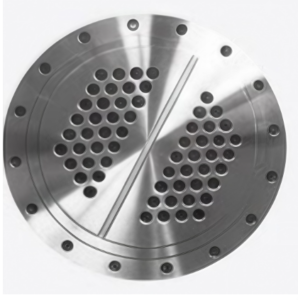
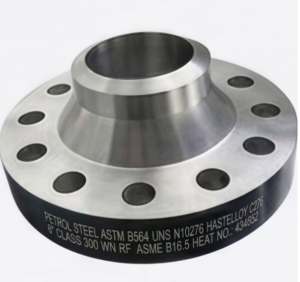
PETROL STEEL CO., LTD. supplies ASTM B564 Hastelloy C276 forged flanges in UNS N10276, solution annealed, for corrosive process piping. The range covers weld neck, slip-on, blind, lap-joint, and socket-weld flanges, with dimensions to ASME B16.5 from NPS 1/2″ to 24″, pressure classes 150 to 2500, and raised-face or ring-joint facings. Every shipment includes a test report, and PMI is available on each piece. If you are drawing up a flange schedule for an acid, chloride, or scrubber line, this page explains what B564 controls, what it leaves to the purchase order, and how to avoid the mistakes we see most often in RFQs.
B564 is a forging standard. It covers forgings in a long list of nickel alloys. It says nothing about flange dimensions: Section 6 leaves dimensions and tolerances to the forging sketch or drawing, which means the ASME B16.5 or B16.47 requirement must be written into the order separately. The standard also defines “forging quality” narrowly, as material furnished to chemical requirements and surface inspection only. That is a floor, not a guarantee of internal soundness, so critical flanges should carry extra inspection agreed upon at the order stage. Some EPC specifications call for ASTM B462 for flanges instead of B564; please tell us which specification you are using, and we will quote against it [confirm].
For N10276, the chemistry and strength are clear. B564 sets nickel as the balance, chromium at 14.5–16.5%, molybdenum at 15.0–17.0%, tungsten at 3.0–4.5%, and iron at 4.0–7.0%, with carbon at 0.010% maximum and silicon at 0.08% maximum. Cobalt is capped at 2.5%, manganese at 1.0%, vanadium at 0.35%, phosphorus at 0.04%, and sulfur at 0.03%. N10276 is supplied as solution-annealed only, with 690 MPa (100 ksi) tensile, 283 MPa (41 ksi) yield, and 40% elongation as minimums, and the table sets no section-thickness limit. The standard also warns that hot working or reannealing may change properties significantly, so we do not rework a forging after the test.
Flange type and class are where RFQs go wrong. Weld neck flanges are the usual choice for high-pressure or cyclic duty because the long hub transfers stress into the pipe, and the bore must match the pipe schedule you intend to weld, so we ask for it. Slip-on and socket-weld flanges suit lower classes and small bores; blind flanges close line ends; and lap-joint flanges pair with stub ends where bolt-hole alignment matters. Please specify the facing (raised face, flat face, or ring joint), the bolt-hole standard, and the class. Pipe, fittings, and flanges should come from the same alloy family, so our Hastelloy C276 seamless pipe, ASTM B619 welded pipe, and ASTM B366 butt-weld fittings fit these flanges directly.
Testing under B564 is simple, and we follow it exactly. Chemistry is determined once per heat. Tension and mechanical properties are tested once per lot, where a lot is all material from the same heat, size, finish, and condition processed at one time. The test specimen comes from a forging or a test prolongation, positioned midway between center and surface on solid forgings and parallel to the direction of greatest metal flow; transverse specimens are allowed if all requirements are met. Grain size testing is not required for N10276. We record each lot’s results on the MTC, not just the minimums, so your inspector sees actual values.
Non-destructive testing and NACE are not part of B564, and buyers who assume they are get surprised. The supplementary UT and liquid penetrant clauses apply only to US government agency orders, and liquid penetrant testing does not apply to hot-finished surfaces. For commercial orders, we agree with UT and PT on machined faces, hardness checks, and hydrostatic pressure tests with you in the PO. NACE MR0175 / ISO 15156 is a separate purchaser requirement: state the clause and edition you need, and we will tell you what records we can supply [confirm] before you rely on it.
Flanges go into flue gas desulfurization units, chemical and petrochemical plants, acid and chloride process lines, pharmaceutical and fine-chemical units, pulp and paper bleaching, and offshore and waste-to-energy facilities. Buyers include EPC contractors, fabricators, and distributors in the Middle East, Southeast Asia, Europe, Africa, and the Americas, and they often combine alloys in a single package. We therefore supply ASTM B564 Alloy 625 flanges (UNS N06625) and ASTM B564 Incoloy 825 flanges (UNS N08825) alongside C276, plus ASTM B574 Hastelloy C276 round bars for studs and machined parts, so one supplier can cover the full flange kit.
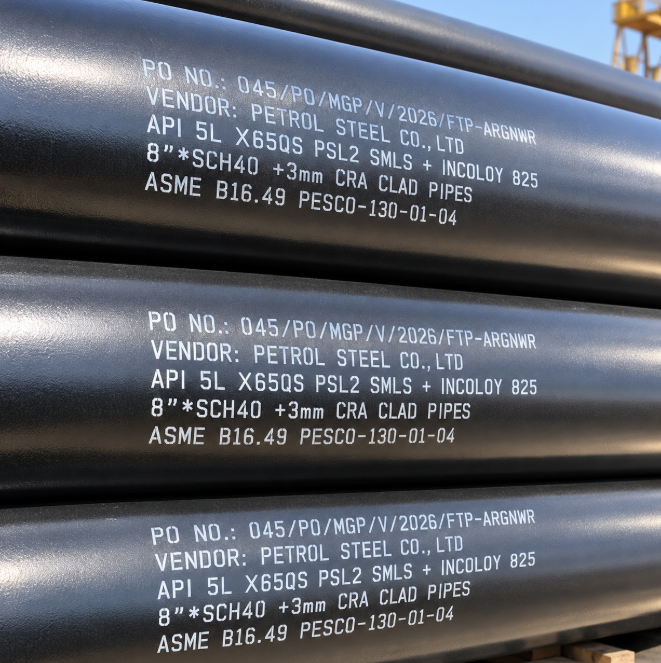
Documents, marking, and packing finish the job. B564 makes the manufacturer’s certification and test report mandatory only when the PO specifies them, so please write both into the order; we issue an EN 10204 3.1 MTC referencing ASTM B564, UNS N10276, condition, and heat number. Each flange is marked with the material name, specification number, heat number, and condition. Pieces are wrapped to avoid carbon-steel contamination, faces are protected, and they are packed in plywood cases with the markings checked against the packing list. Lead time is [30–45 days] for typical orders, shorter for stock. PETROL STEEL CO., LTD. exports pipe, fittings, flanges, and bars for oil and gas, energy, and process projects. Send NPS, class, grade & quantity, and our engineers will reply with a quotation covering type, facing, testing scope, packing, and delivery terms.
Technical Specifications
| Item | Specification |
|---|---|
| Standard | ASTM B564 (ASME SB-564) forging; dimensions ASME B16.5 / B16.47 |
| Alloy / UNS | Hastelloy C276 / N10276 |
| Condition | Forged, solution-annealed |
| Types | Weld neck (WN), slip-on (SO), blind (BL), lap-joint (LJ), socket-weld (SW), threaded |
| Size | [NPS 1/2″–24″ per B16.5; larger per B16.47 on request] |
| Pressure class | [150, 300, 600, 900, 1500, 2500] |
| Facing | Raised face, flat face, ring-type joint |
| Forging quality | Chemistry and surface inspection only (B564 Table 2, footnote A) |
| Testing | Chemistry per heat, tension per lot, PMI, UT/PT/hydro by agreement |
| Marking | Material name, ASTM B564, heat number, condition |
| Certificate | EN 10204 3.1 (state it on the PO) |
Chemistry (%, N10276): Ni balance · Cr 14.5–16.5 · Mo 15.0–17.0 · Fe 4.0–7.0 · W 3.0–4.5 · Co 2.5 max · C 0.010 max · Si 0.08 max · Mn 1.0 max · V 0.35 max · P 0.04 max · S 0.03 max
| Condition | Tensile min | Yield 0.2% min | Elongation min |
|---|---|---|---|
| Solution annealed | 690 MPa (100 ksi) | 283 MPa (41 ksi) | 40% |
FAQ
- What does ASTM B564 cover? Forgings in many nickel alloys, including UNS N10276. It sets chemistry and mechanical properties, not flange dimensions.
- Which standard gives the flange dimensions? ASME B16.5 for NPS 1/2″–24″ or B16.47 for larger sizes. State it on the PO.
- What are the minimum mechanical properties of N10276? 690 MPa tensile, 283 MPa yield, and 40% elongation (solution annealed).
- Does B564 require UT or PT? No. They are optional extras by agreement for commercial orders.
- Is NACE MR0175 included in B564? No. It is a separate requirement; state the clause and edition on the PO.
- Do I need to ask for a certificate? Yes. B564 requires certification and a test report only when the PO states it.
- Which flange type should I choose? Weld neck for high pressure and cyclic duty; slip-on or socket-weld for lower classes and small bore; blind for line ends; and lap-joint with stub ends.
- What do you need for a quotation? Type NPS, class, facing, bore or schedule, quantity, test requirements, certificate, and destination port.