Large Diameter Wind Turbine Tower Flanges | Precision Machined & DNV-Ready Supplier
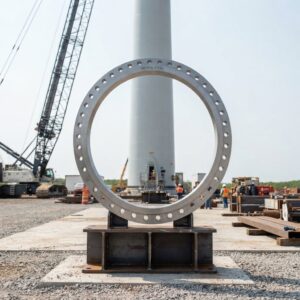
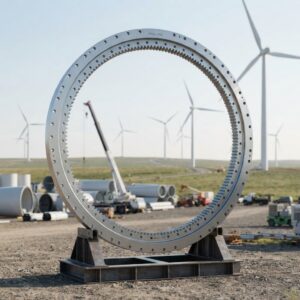
Large-diameter wind turbine tower flanges are critical structural components connecting tower sections, tower-to-foundation connections, offshore transition pieces, and monopile structures, depending on project design. As wind turbines continue to grow in size, the importance of factors like flange diameter, section thickness, bolt loads, fatigue requirements, and machining accuracy to the overall integrity of the bolted connection becomes more significant. Recent offshore wind projects have demonstrated practical use of tower and transition-piece flanges in the 7–8 m diameter range, and precision machining below 1 mm flatness has become an important production focus for large offshore wind structures.
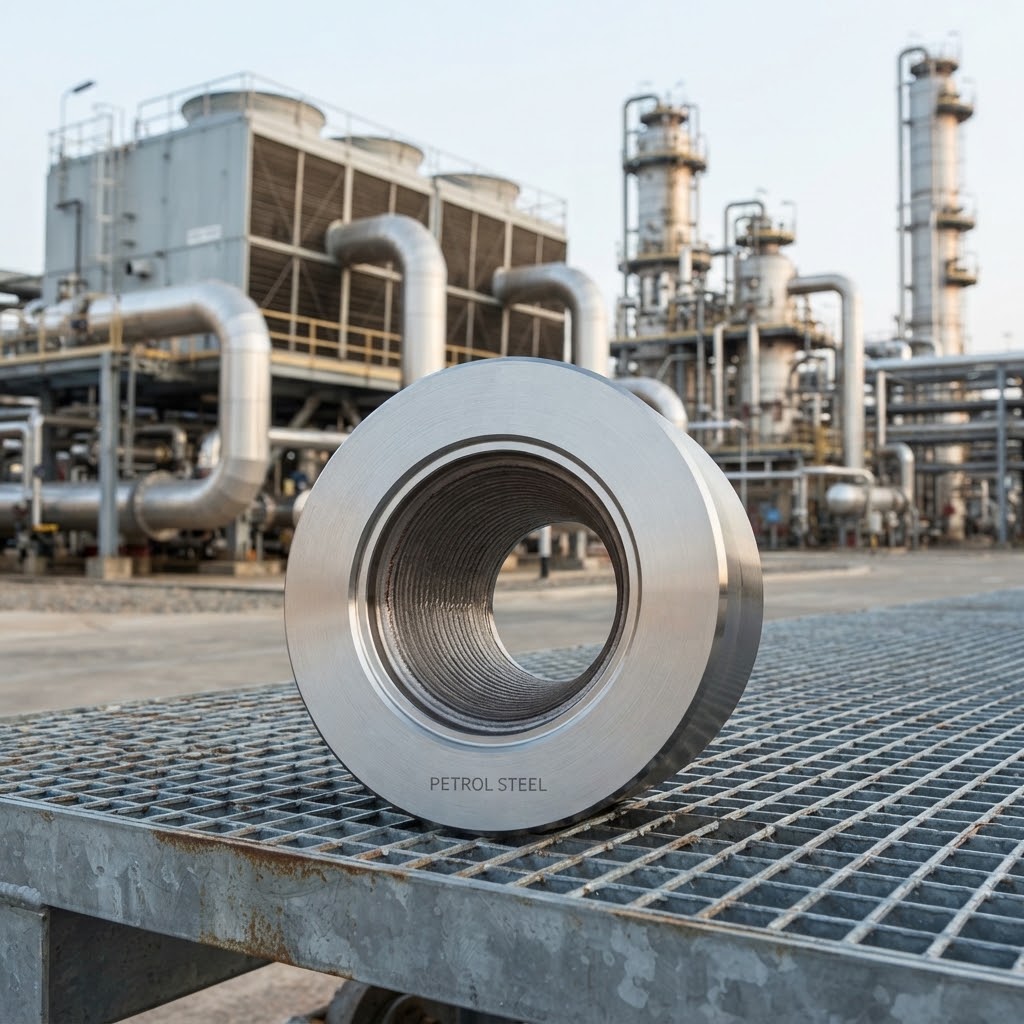
PETROL STEEL provides large-diameter forged wind turbine tower flanges for onshore wind, offshore wind, high-tower structures, and heavy-duty energy infrastructure. Standard materials include S355NL, S355J2, S355JR, ASTM A694 F52/F60/F65, ASTM A105, and Q345E/D. Higher strength grades S420NL, S460NL, and ASTM A694 F65/F70 are available upon project specification. Material selection for cold-climate applications may include low-temperature impact requirements, which are normally specified at -20°C to -50°C. Providing a flange on the drawing is not enough; we need a traceable, forged, and machined component that can be incorporated into the customer’s QA/QC and project documentation system.
Forged Construction for Large-Diameter Wind Tower Connections
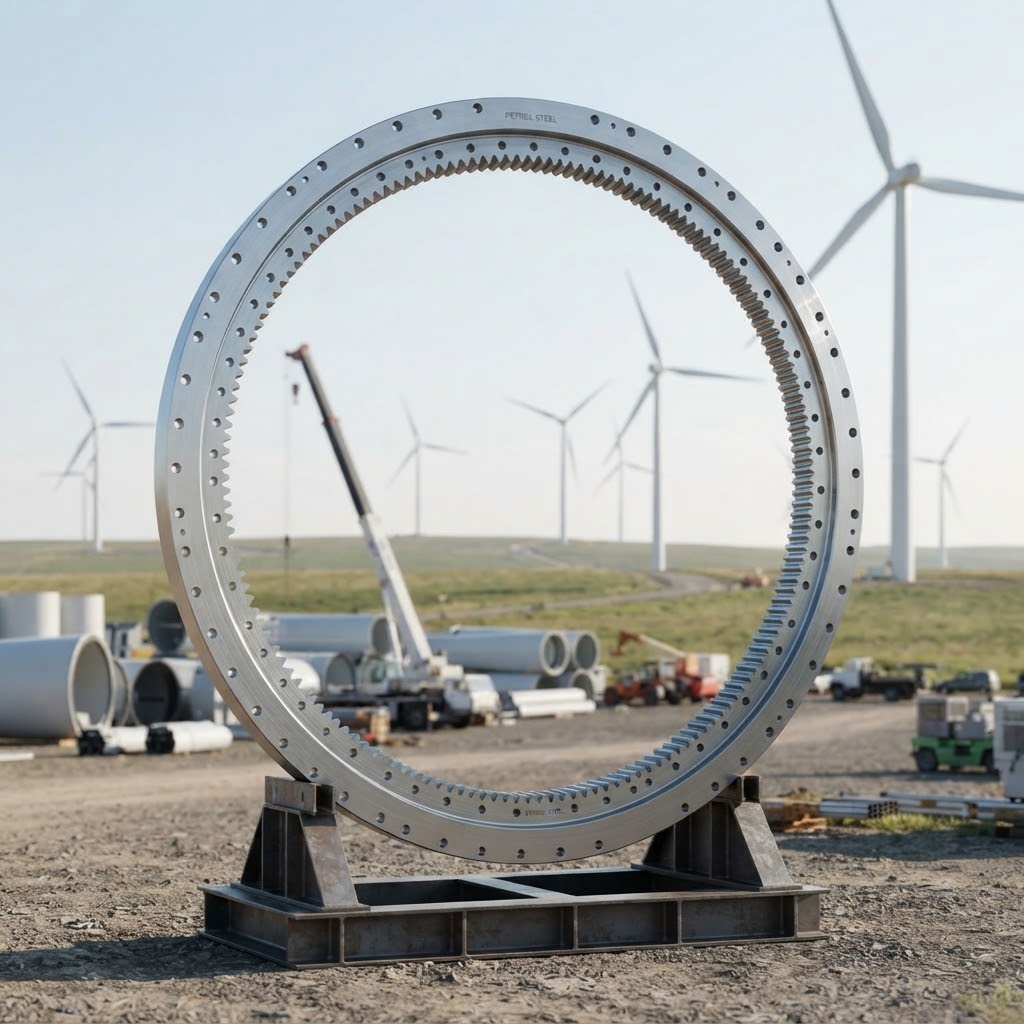
Our regular manufacturing process is rolled ring forging or die forging, normalizing or normalizing and tempering (N+T), CNC precision machining, and high-accuracy drilling. Compared with a fabricated flange route, integral forging offers a continuous metal flow without butt-welded joints. Integral forgings are widely associated with large structural ring applications where mechanical properties, fatigue performance, and manufacturing consistency are important considerations. Large-diameter forged wind flanges have historically been a key element of the offshore wind supply chain, and early technical clarification and capacity planning are important for EPC procurement due to the small number of qualified suppliers and long production cycles.
Tower base flanges are typically DN 3500-6500 mm in diameter, although DN 4000-5500 mm is more common. Tower middle and top flanges are generally DN 2000-4500 mm, while offshore wind monopile and transition-piece applications can require diameters of DN 7000 mm and above. Typical flange axial height is 150-400 mm, usually 200-300 mm. Flange body or neck thickness: 60-180 mm. Mating-face thickness is typically >= 80 mm. The bolt connection dimensions are adapted to the bolt sizes M36 to M64. The final dimensions, bolt-circle diameter, hole pattern, and machining requirements are controlled by the approved project drawing rather than a generic catalog size.
Precision Machining Is Part of the Engineering Requirement
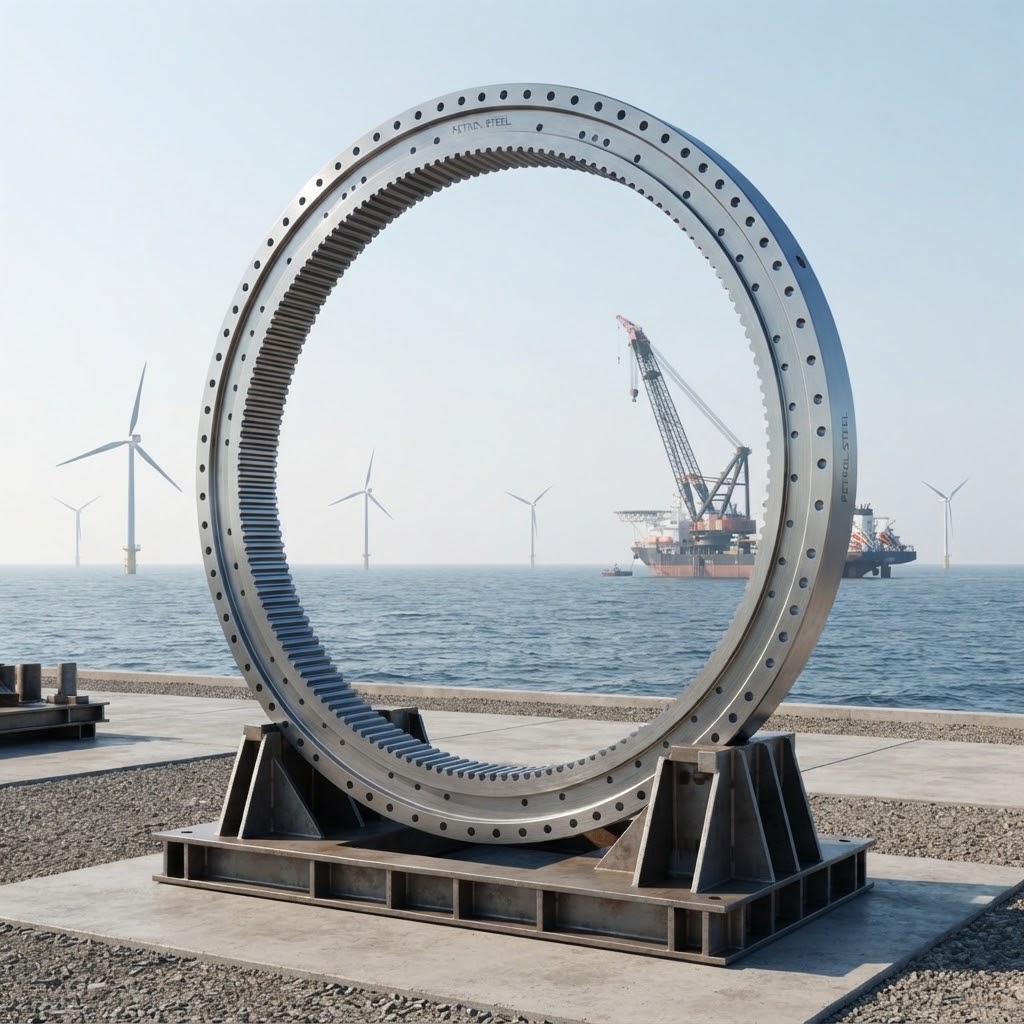
For project buyers, the key question is often not whether a supplier can forge a 5 m or 7 m ring, but whether the finished flange will come with the dimensional accuracy needed for tower assembly. A flange is ultimately part of a large bolted structural joint, so machining of the mating face, bolt-hole positioning, flatness, and surface finish directly impact installation and connection quality. Industry projects featuring 7.5 m offshore tower flanges in 2025 demonstrated growing interest in sub-millimeter flange flatness and precision machining for large turbine structures.
PETROL STEEL uses CNC vertical turning and precision drilling to produce large forged flanges. Typical project-controlled requirements are OD/ID tolerance +/-1.5 mm, height tolerance +/-1.0 mm, sealing-face flatness <=0.5 mm/m, bolt-circle diameter tolerance +/-0.5 mm, and hole-spacing tolerances +/-0.5 mm to +/-1.0 mm, unless otherwise specified by the approved drawing. Typical surface roughness requirements are sealing faces Ra ≤ 6.3 μm and mating surfaces Ra ≤ 12.5 μm. These values are given as the stated procurement specification and are subject to the applicable project drawing and standard.
Inspection, Traceability, and DNV-Related Project Documentation
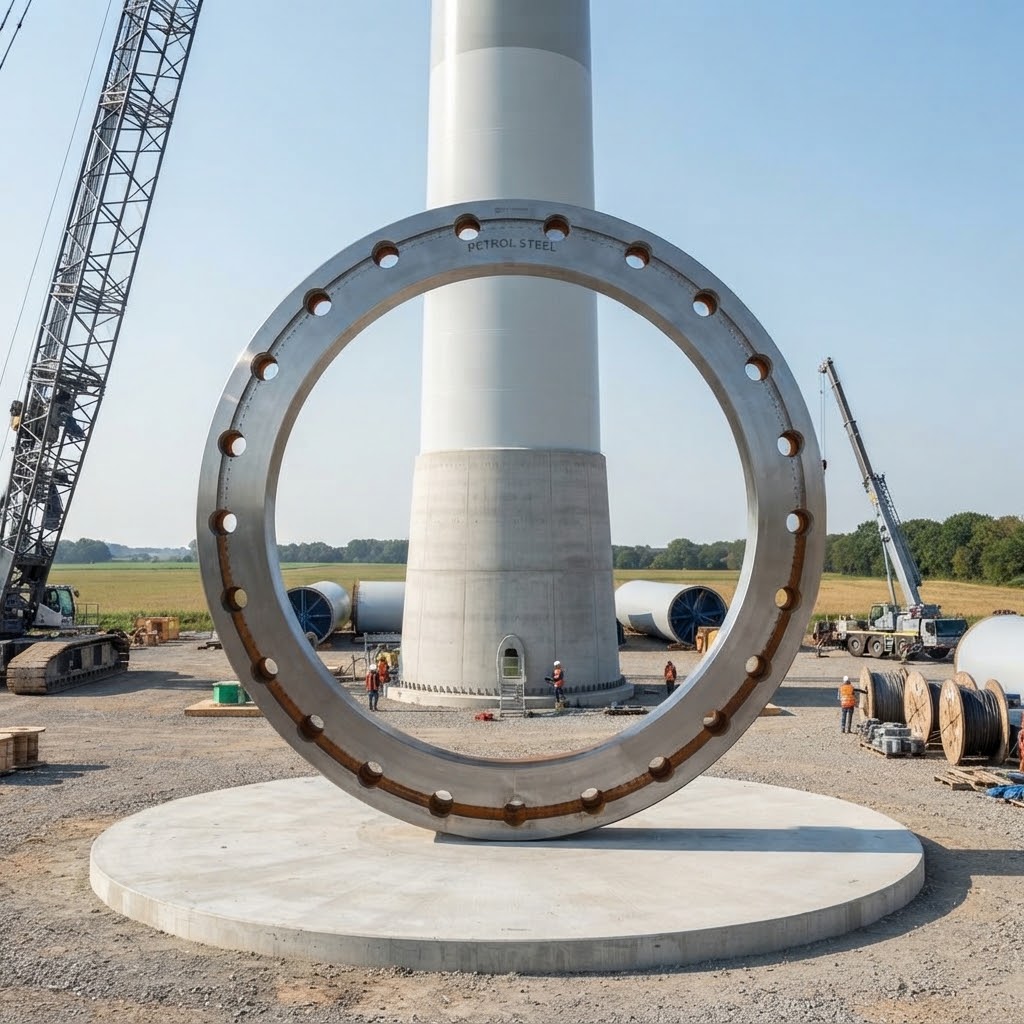
Support structures for wind turbines have to satisfy detailed structural verification and certification requirements, which are project-specific. DNV-ST-0126 gives principles and guidelines for the structural design of wind turbine support structures and may be used as a contractual reference document between suppliers and purchasers, including projects where DNV verification and certification are involved. IEC 61400-6 also covers tower and foundation design requirements. Amendment 1 to IEC 61400-6 was published in 2025.
For projects with higher QA/QC requirements, PETROL STEEL can offer 100% ultrasonic testing according to EN 10228-3 / ASTM A388, as well as MT/PT according to the relevant EN 10228 requirements. Dimensional inspection is done by CMM or dedicated gauges, supported by Tensile testing, Charpy V-notch impact testing at -20°C / -40°C / -50°C, Hardness testing, and PMI chemical analysis. Available documentation includes material certificates according to EN 10204 3.1 / 3.2, NDT reports, dimensional inspection reports, and heat-treatment records, with third-party inspection by SGS, BV, DNV, or other project-appointed agencies where specified. DNV itself distinguishes between component certification and project and support-structure certification. The applicable certification scope should always be verified against the project specification and should never be assumed from the product name.
Corrosion Protection for Onshore and Offshore Wind Applications
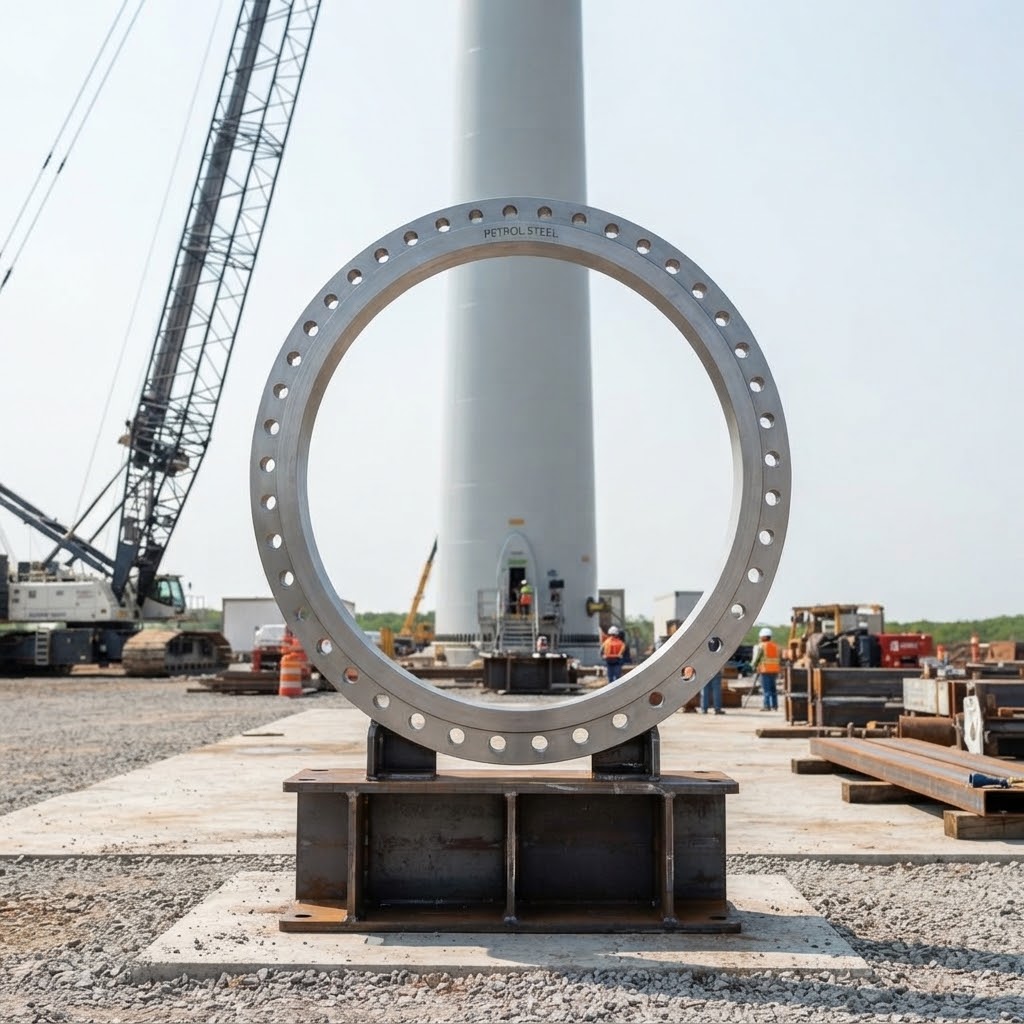
The flange for offshore wind is not in the same environment as a conventional indoor industrial component. The coating and protection system must be defined in conjunction with the project requirements, as exposure to marine atmosphere, humidity, salt, and transportation or storage conditions is required. PETROL STEEL can supply coating systems according to ISO 12944 C4/C5-M or NACE SP0108, including zinc-rich epoxy primer, epoxy micaceous iron oxide intermediate coating, and polyurethane topcoat. The total dry-film thickness specified is usually 280–320 μm. Thermal Spray Aluminum (TSA) or a double-layer epoxy system may be specified for offshore or high-humidity service. Rust-preventive oil/VCI protection for exposed machined surfaces. Flange faces and bolt holes are protected in export packing. DNV also considers corrosion protection an important aspect of wind-turbine support-structure practice, especially for offshore wind applications.
A Supplier Built Around EPC Procurement Requirements
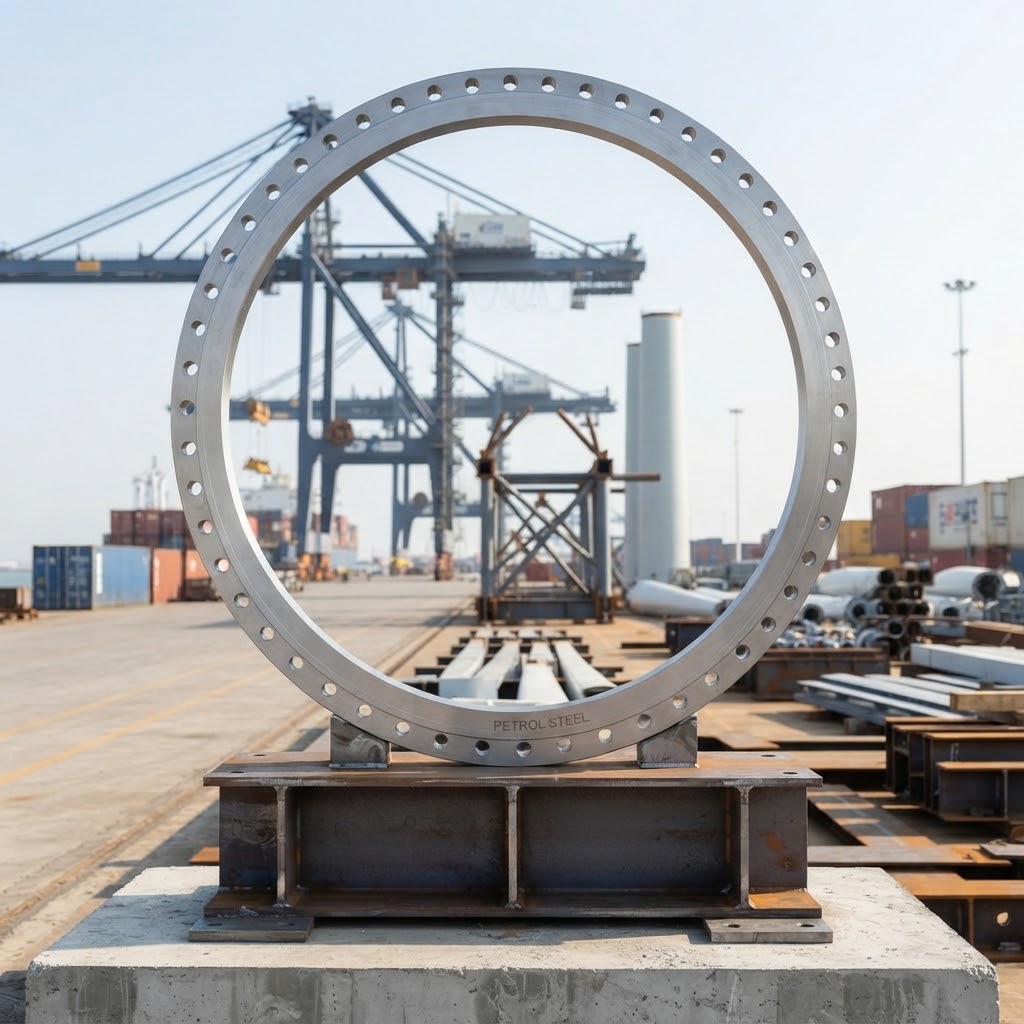
PETROL STEEL treats the large wind flange supply as a project procurement package and not a standard catalog item. Scope of supply may include raw material sourcing, rolled ring or die forging, heat treatment, CNC machining, drilling, NDT, mechanical testing, dimensional inspection, coating, preservation, export packing, and logistics. Each flange is marked with the project number, material grade, heat number, dimensions, and lifting points to assist customers with MDR and traceability requirements. This is especially the case where the flange is part of a larger tower, transition piece, or monopile package and the project buyer wants a single co-ordinated supply interface rather than a number of sub-contractors.
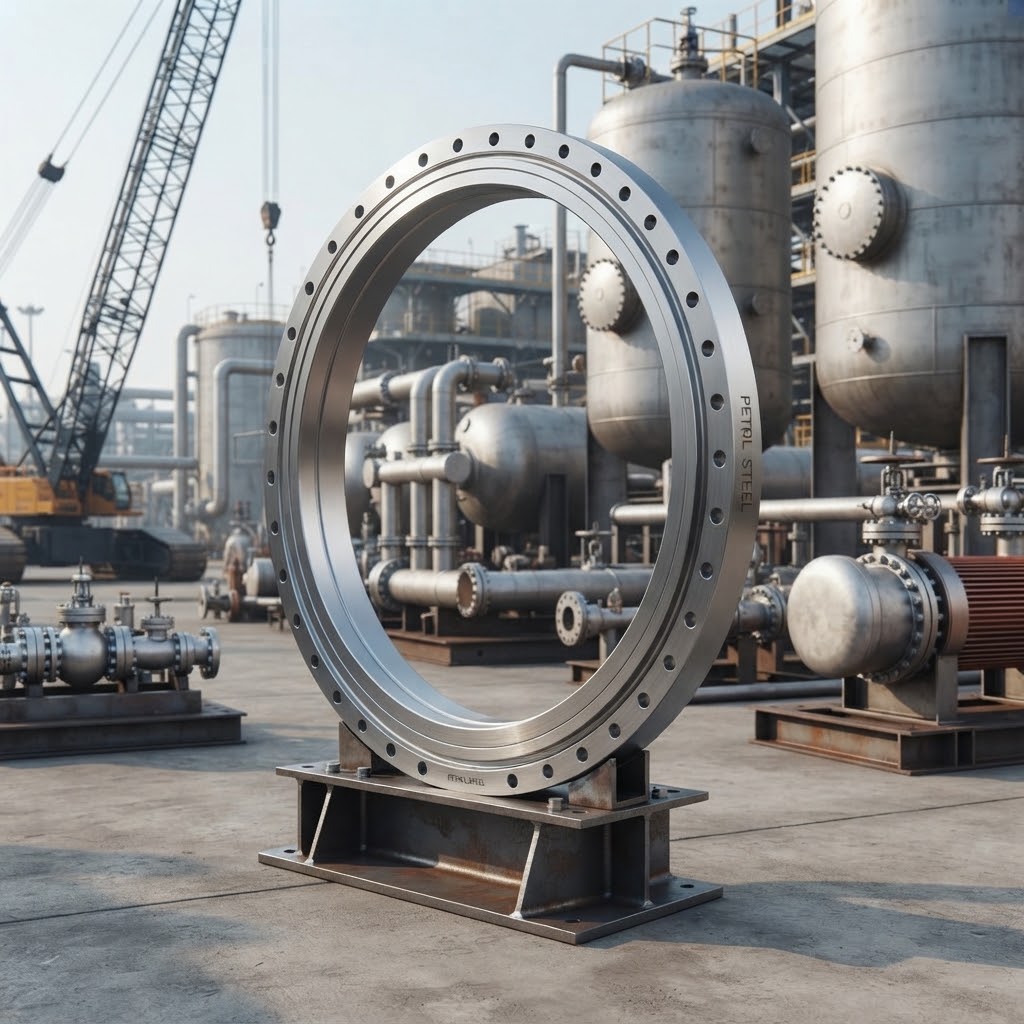
Our product range includes onshore wind turbine towers, offshore wind towers, monopiles, transition pieces, jacket structures, high-tower projects, port cranes, heavy steel structures, pressure vessel applications, and large storage tank connections. For wind projects, the flange design is still drawing-driven: material grade, diameter, thickness, bolt pattern, machining tolerances, impact test temperature, coating system, and level of inspection are confirmed against the technical specification of the purchaser. This approach provides a practical way from drawing review to technical clarification, inspection, and commercial quotation for EPC contractors, tower manufacturers, and foundation fabricators seeking a qualified large-diameter wind turbine tower flange supplier/manufacturer.
Technical Procurement Snapshot
| Requirement | Typical Supply Range |
| Material | S355NL, S355J2, S355JR, ASTM A694 F52/F60/F65, ASTM A105, Q345E/D; higher-strength S420NL, S460NL, A694 F65/F70 |
| Diameter | DN 2000–4500 mm tower middle/top; DN 3500–6500 mm tower base; up to DN 7000 mm+ for offshore monopile/transition-piece applications |
| Thickness | 60–180 mm flange body/neck; mating face normally ≥80 mm |
| Fabrication | Rolled Ring Forging / Die Forging → N+T or Normalizing → CNC Machining → Precision Drilling |
| Inspection | 100% UT, MT/PT where specified, dimensional inspection, tensile, Charpy impact, hardness, PMI |
| Documents | EN 10204 3.1/3.2, NDT reports, dimensional reports, heat-treatment records |
| Standards | EN 1092-1, EN 10025, EN 10222, ASME B16.47, ASTM A694, ASTM A105, IEC 61400-6, DNV-ST-0126, ISO 12944, and project-specific requirements |
| Applications | Onshore Wind, Offshore Wind, Tower Sections, Monopiles, Transition Pieces, Jackets, High Towers, Heavy Steel Structures |
Send Your Drawing or RFQ → PETROL STEEL Technical Team Review → Technical & Commercial Quotation