TP316L Corrugated Heat Exchanger Tube for Oil & Gas, Petrochemical & Industrial Heat Exchange
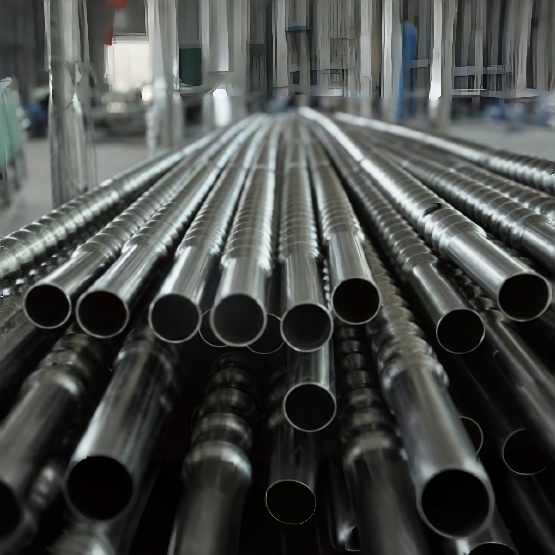
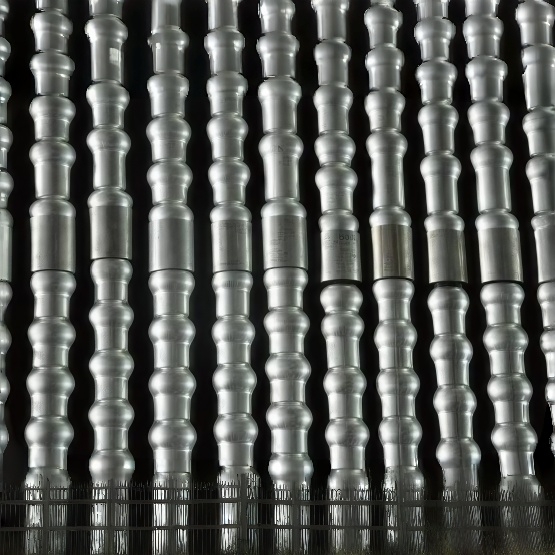
PETROL STEEL supplies TP316L Corrugated Heat Exchanger Tube for industrial heat transfer, heating, cooling, refrigeration, and process equipment applications. Manufactured from TP316L / UNS S31603 / SUS316L stainless steel, this corrugated heat exchange tube combines the corrosion resistance of Cr-Ni-Mo austenitic stainless steel with a controlled corrugated profile designed to promote turbulence and improve fluid mixing inside the tube. It is suitable for heat exchangers, condensers, evaporators, boilers, and other process equipment where stainless steel construction, controlled tube geometry, and reliable inspection are required. For international oil & gas, petrochemical, and EPC projects, PETROL STEEL supports both standard tube supply and customized configurations based on customer drawings, equipment specifications, isometric drawings, and MTOs. The product can be supplied as a straight corrugated tube or reviewed for engineered configurations, including Stainless Steel Corrugated Tube, Stainless Steel Heat Exchange Tube, Stainless Steel Internal Wave Pipe, Stainless Steel Low-Rib Pipe, U-Shaped Heat Exchange Pipe, Serpentine Heat Exchange Pipe, and Stainless Steel Floating Coil.
TP316L / UNS S31603 Stainless Steel Material and Available Sizes
The standard material is TP316L / UNS S31603. The equivalent grades are 00Cr17Ni14Mo2 / 022Cr17Ni12Mo2 (China), SUS316L (JIS), and X2CrNiMo18-14-3 / 1.4404 (DIN). TP316L is a low-carbon, Cr-Ni-Mo austenitic stainless steel chosen for its corrosion resistance and compatibility with a wide range of industrial process environments. The molybdenum-containing composition has better resistance to localized corrosion than conventional Cr-Ni stainless steel grades, although the ultimate choice of material should always be checked against the actual process medium, temperature, pressure, and corrosion conditions of the project.
The standard root outside diameter is about 16–50 mm, which approximately equals DN15–DN50, and the crest outside diameter is about 19–62 mm. Typical tube sizes are Φ16 × 19, Φ19 × 22/25, Φ20 × 25, Φ22 × 25/28, Φ25 × 30/32, Φ32 × 42, Φ38 × 42/45, Φ40 × 50, Φ48 × 54, and Φ50 × 57/62 mm. The wall thicknesses generally available are 0.6-1.2 mm, including 0.6, 0.7, 0.8, 0.9, 1.0, 1.1, and 1.2 mm. The approximate unit weight is from 0.257 to 1.892 kg/m for root OD Φ16-Φ50 mm, depending on the dimensions and wall thickness selected. Tube lengths can be customized to customer drawings or project specifications, with the option of full-length heat treatment for lengths up to 13 m.
| Technical Specifications of TP316L Corrugated Heat Exchanger Tube | |
| Item | Technical Specification |
| Product Type | Stainless Steel Corrugated Heat Exchanger Pipe / Corrugated Tube |
| Material Grade | TP316L / UNS S31603 |
| Equivalent Grades | China GB: 00Cr17Ni14Mo2 / 022Cr17Ni12Mo2; Japan JIS: SUS316L; Germany DIN: X2CrNiMo18-14-3 / 1.4404 |
| Material Type | Austenitic Cr-Ni-Mo stainless steel |
| Manufacturing Process | Stainless steel strip → automatic TIG welding → bright solution annealing → fixed-length cutting → CNC/program-controlled corrugation → eddy current testing → pressure / airtight testing → packaging |
| Welding Process | Fully automatic TIG welding |
| Corrugation Process | CNC / program-controlled wave forming |
| Heat Treatment | Online or offline bright solution treatment; maximum furnace length: 13 m |
| Root Outside Diameter | 16–50 mm / approximately DN15–DN50 |
| Crest Outside Diameter | 19–62 mm |
| Common Sizes | Φ16 × 19; Φ19 × 22/25; Φ20 × 25; Φ22 × 25/28; Φ25 × 30/32; Φ32 × 42; Φ38 × 42/45; Φ40 × 50; Φ48 × 54; Φ50 × 57/62 mm |
| Wall Thickness | 0.6–1.2 mm |
| Common Wall Thicknesses | 0.6 / 0.7 / 0.8 / 0.9 / 1.0 / 1.1 / 1.2 mm |
| Approx. Unit Weight | 0.257–1.892 kg/m for root OD Φ16–Φ50 mm |
| Corrugation Pitch | 15 / 20 / 25 / 30 / 40 / 45 / 50 mm |
| Pitch Tolerance | ±1.0 mm |
| Crest Depth Tolerance | ±0.05 mm |
| Length | Customized according to customer drawing, isometric drawing, or project requirement |
| Maximum Heat-Treatment Length | 13 m |
| Surface Condition | Bright solution-treated surface |
| OD Tolerance | According to applicable GB/T 12771 / ASTM A312 requirements |
| Wall Thickness Tolerance | According to applicable GB/T 24593 / ASTM A249 requirements |
| Eddy Current Testing | 100% on-line eddy current testing |
| Airtight / Pressure Testing | Individual underwater airtight/pressure test |
| Dimensional Inspection | 100% visual and dimensional inspection |
| Material Verification | PMI by handheld spectrometer |
| Hardness Testing | Vickers hardness testing |
| Material Certification | EN 10204 3.1; 3.2 available when required |
| Product / Material Standards | GB/T 12771; GB/T 24593; GB 150.2; Q/QDY 01-2017 |
| International Standards | ASTM A312/A312M; ASTM A688/A688M; ASTM A249/A249M; ASTM A789/A789M; ASTM A790/A790M; JIS G3463; JIS G3468; DIN 17455; DIN 17457 |
| Packaging | Export-grade plywood crates; order-number marking; individual pipe-section protection; packing list matched with each crate |
| Shipment | Suitable for international sea and air shipment |
Corrugated Profile for Heat Exchange Applications
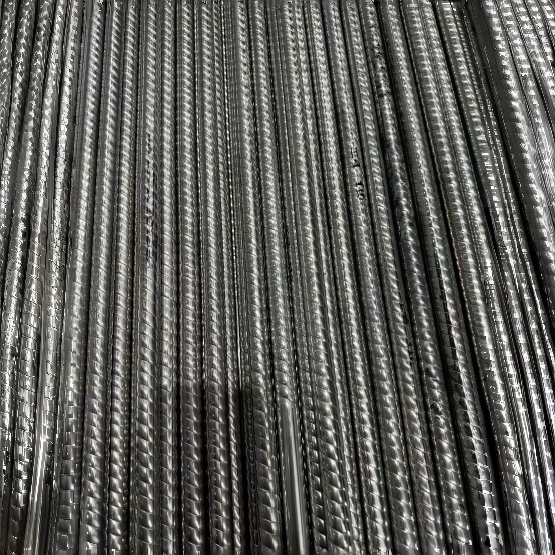
The TP316L Corrugated Heat Exchanger Tube has a controlled wave-shaped profile instead of a conventional smooth tube surface. The standard corrugation pitches are 15, 20, 25, 30, 40, 45, and 50 mm, with a stated pitch tolerance of ±1.0 mm and crest depth tolerance of ±0.05 mm. The corrugated geometry changes the internal flow path and increases turbulence, which can improve fluid mixing and the use of the available heat-transfer surface. The tube is thus suitable for use in the types of situations where the effects of thermal movement, heat transfer capability, and the need for compact equipment are to be considered.
The corrugated structure also allows for the flexibility needed to deal with thermal expansion and contraction. This flexibility can help to reduce thermal stress transferred to tube sheets and connected components in suitable equipment designs. However, the heat-transfer coefficient, pressure drop, allowable pressure, and operating temperature should not be taken from the corrugated profile alone. These parameters should be set according to the actual process conditions and equipment design calculations for an EPC project. PETROL STEEL may review the customer’s technical specification, tube schedule, or equipment drawing prior to confirming the proposed tube configuration.
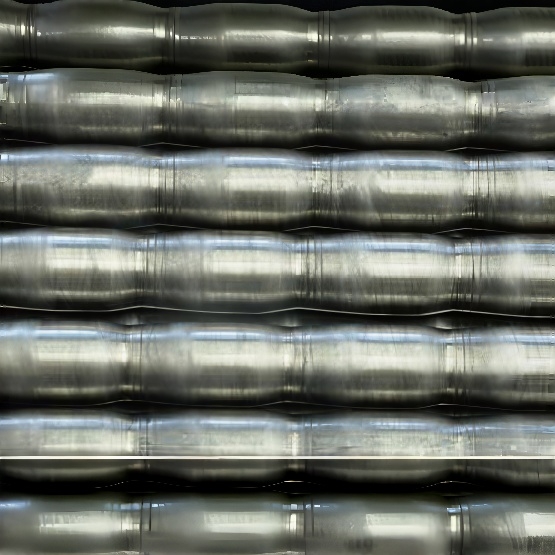
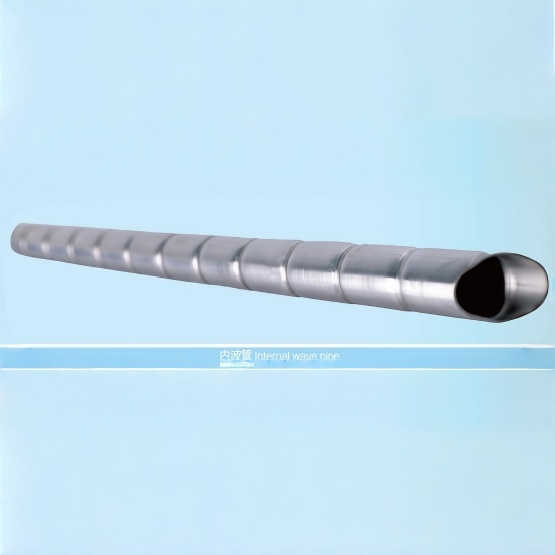
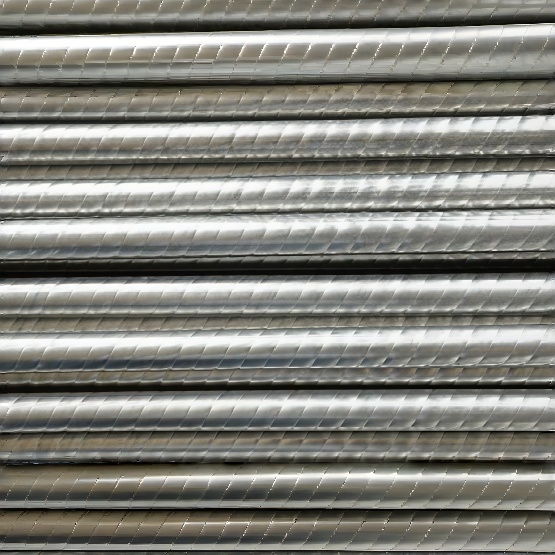
On the same manufacturing platform, multiple related configurations can be supported. An internally waved flow path is specified for a stainless steel internal wave pipe. A stainless steel low-rib pipe provides another formed-surface configuration for heat-transfer applications. They shall be regarded as independent product configurations and not interchangeable products, with the ultimate geometry to be in accordance with the project drawing or approved technical specification.
TIG Welding, Corrugation, and Bright Solution Treatment
High-quality stainless steel strip is used by PETROL STEEL in a controlled production sequence to manufacture the tube: stainless steel strip preparation, tube forming, full-automatic TIG welding, bright solution treatment, fixed-length cutting, CNC/program-controlled corrugation, eddy current testing, airtight/pressure testing, and final packaging. The automatic TIG welding provides a controlled path for the manufacturing of welded tubes, and the wave forming is controlled by CNC to maintain the corrugation geometry as prescribed.
Bright solution treatment can be done on-line or off-line with a maximum furnace length of 13 m. This process gives a bright surface treatment and supports the required metallurgical condition of the stainless steel tube. The manufacturing sequence is of particular relevance to EPC procurement, as the tube is not just supplied as a formed stainless steel strip, but welding, heat treatment, forming, and inspection are integrated into the production route.
Engineered configurations for customized equipment can be further reviewed for straight tubes. These may be U-shaped heat exchange pipe and serpentine heat exchange pipe configurations as per customer drawings and stainless steel floating coil units for specified heating or heat-transfer applications. Where the customer is able to provide the desired configuration, dimensions, and service conditions, an engineered pipeline component in the form of a condenser/condensing exhaust pipe can also be considered.
Inspection, Testing, and EPC Documentation
Inspection and documentation are central to the supply scope in international EPC procurement. PETROL STEEL’s inspection process includes 100% online eddy current testing, individual underwater airtightness/pressure testing, 100% visual and dimensional inspection, PMI material verification using a handheld spectrometer, and Vickers hardness testing. The inspection steps provide the buyer with traceability checks on weld integrity, dimensional conformance, material identification, and product condition.
Dimensional requirements may be controlled in accordance with applicable product specifications. The outside-diameter requirements are specified in GB/T 12771 / ASTM A312. The wall-thickness requirements are specified in GB/T 24593 / ASTM A249. Supply shall be in compliance with product and material standards GB/T 12771, GB/T 24593, GB 150.2 and Q/QDY 01-2017 and international standards, including ASTM A312/A312M, ASTM A688/A688M, ASTM A249/A249M, ASTM A789/A789M, ASTM A790/A790M, JIS G3463, JIS G3468, DIN 17455, and DIN 17457 as applicable to the ordered product and project specification.
Material certification is available as the EN 10204 3.1 certificate. 3.2 Certification is available on request. For project procurement, the final inspection and documentation package shall be agreed upon during the RFQ and technical clarification stage so that the supplied documents correspond to the purchaser’s inspection and test plan, quality requirements, and project documentation schedule.
Applications for Oil & Gas, Petrochemical, and Process Equipment
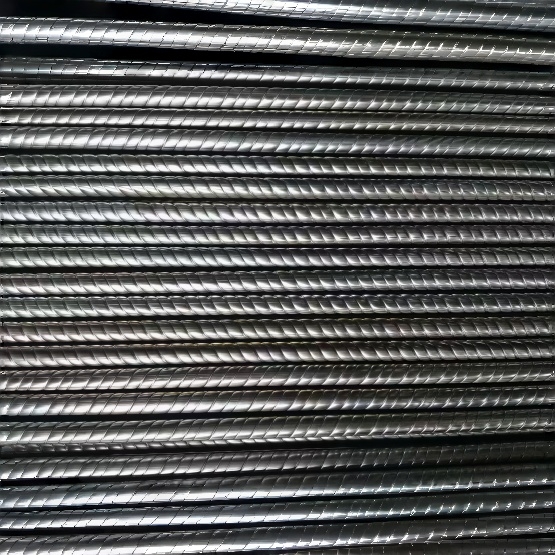
The TP316L Corrugated Heat Exchanger Tube is manufactured to satisfy the needs of a wide range of industrial heat transfer applications in the oil & gas, petrochemical, chemical, power generation, pharmaceutical, food processing, and heating and refrigeration industries. Typical equipment comprises evaporators, condensers, boilers, and other heat exchange systems. TP316L construction is particularly important when a thin-wall stainless steel tube configuration is desired and corrosion resistance is needed.
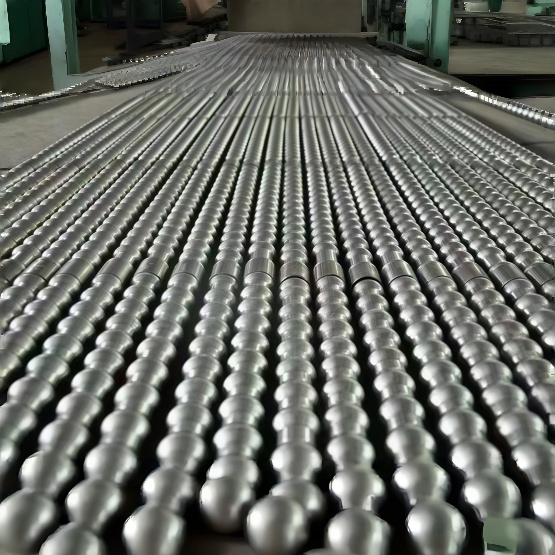
For oil & gas and petrochemical EPC projects, the tube can be considered for process heat exchange and associated equipment where the project specification allows TP316L and the tube geometry satisfies the required thermal and mechanical design conditions. For chemical and corrosive services, the process medium and operating conditions are to be provided so that material suitability can be reviewed before quotation. Tube diameter, corrugation geometry, length, and configuration can be chosen according to equipment design for refrigeration, heating, and condenser systems.
Therefore, the product can exceed standard requirements for a stainless steel heat exchange tube. Related configurations or engineered components: Stainless Steel Corrugated Tube, Stainless Steel Internal Wave Pipe, Stainless Steel Low-Rib Pipe, U-Shaped Heat Exchange Pipe, Serpentine Heat Exchange Pipe, Stainless Steel Floating Coil, and Condenser/Condensing Exhaust Pipe. PETROL STEEL can review the requirements as per the engineering design.
Custom Supply for Engineering Procurement and Project Buyers
The real question for EPC procurement is not “Can a supplier provide 316L stainless steel tubing?” The procurement package may specify the material grade, equivalent standard, root and crest diameter, wall thickness, corrugation pitch, tube length, heat-treatment condition, dimensional tolerances, inspection method, pressure/airtight testing, PMI, material certificates, packaging, and shipping requirements. PETROL STEEL organizes the supply around these verifiable requirements so that EPC engineers can verify technical compatibility, procurement managers can verify documentation and inspection requirements, and project buyers can prepare a clear commercial RFQ.
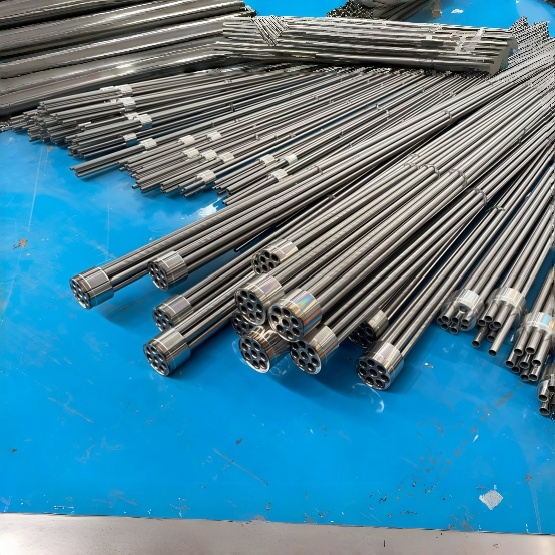
Standard configurations and custom tube assemblies can be reviewed against customer drawings, isometric drawings, MTOs, and equipment specifications. Export packing consists of plywood crates with order numbers and individual tube-section protection, with packing lists corresponding to the appropriate crates for international shipment by sea or air.
For project-specific quotations, the customer can provide the required material grade, tube dimensions, corrugation pitch, quantity, tube length, configuration, operating conditions, applicable standard, inspection requirements, and certification requirements. Then the requirements can be reviewed by the technical team of PETROL STEEL, and the technical and commercial quotation can be prepared.
Send Your Drawing or RFQ → PETROL STEEL Technical Team Review → Technical & Commercial Quotation