Why SAWL for large structural hollow sections
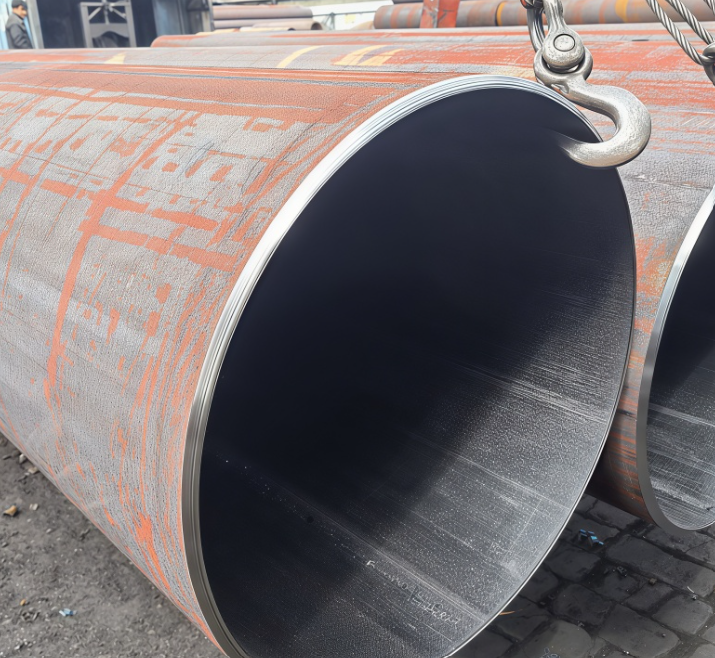
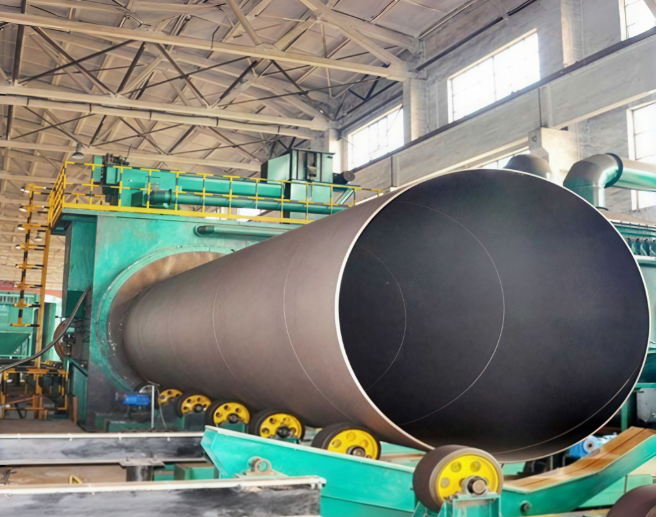
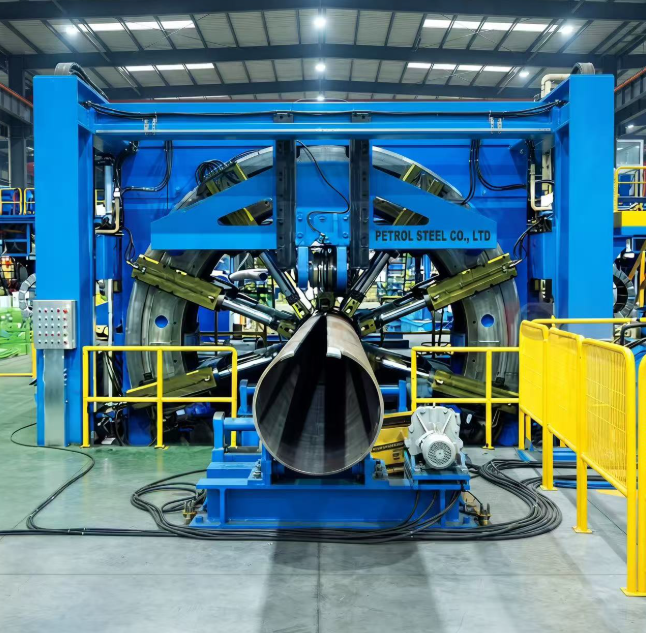
EN 10219 recognizes three welded routes for cold-formed hollow sections: HFW, SAWL, and SAWH. For small and medium sizes, HFW is the usual answer. Once the diameter passes roughly 400 mm and the wall gets heavy, SAWL becomes the practical route. A single straight longitudinal weld is easier to inspect and gives designers a predictable weld position, which matters when members are cut, mitered and welded into nodes. Where a project can accept a helical seam, our SSAW EN 10219 S355J2H spiral welded pipe is the more economical option, and we will tell you plainly which one suits your drawings. For the full large-diameter picture, see our heavy wall infrastructure steel pipes range.
Technical specifications
| Item | Specification |
| Standard | EN 10219-1 (delivery conditions), EN 10219-2 (tolerances, dimensions, section properties) |
| Steel grade | S355J2H (other EN 10219 grades on request) |
| Process | SAWL, cold-formed, no overall heat treatment |
| OD | 457–4000 mm |
| Wall thickness | 8–50 mm |
| Length | 5.8–18 m, fixed or random |
| Ends | Plain, square cut, or beveled for field welding |
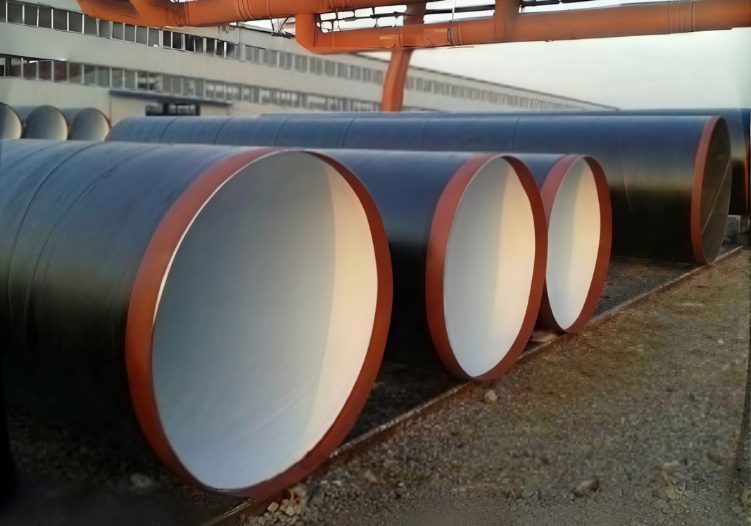
| Coating | Bare, black varnish, 3LPE/FBE, or epoxy/zinc primer on request |
| Inspection | UT/RT of weld, hydrostatic or alternative test, dimensional and visual |
| Certificate | EN 10204 3.1; 3.2 with the third-party witness |
Reading the S355J2H grade properly
S355 means a minimum yield strength of 355 MPa for the thinner wall range, with tensile strength in the 470–630 MPa band. J2 means the steel is impact tested to 27 J at −20°C, and H indicates a hollow section. Two details are often missed in inquiries. First, yield strength steps down as wall thickness increases, so a 40 mm wall does not carry the same minimum as a 12 mm wall. Second, the property tables in EN 10219 are written up to 40 mm; our walls above that are supplied under the project specification and agreed test requirements, which we will confirm in writing before you place an order. The chemistry is controlled for weldability with a carbon equivalent limit, and we report the actual heat analysis on every certificate.
EN 10219 or EN 10210, and how it compares with ASTM
Buyers regularly ask us which standard to quote. EN 10219 covers cold-formed sections; EN 10210 covers hot-finished sections, including our seamless range. Cold forming gives tighter dimensional consistency and a lower cost for large diameters, while hot-finished sections have more uniform properties around the section and are sometimes preferred for heavily loaded nodes. Where the structural engineer has written EN 10210, we do not substitute silently. We will point you to our seamless piling and structural pipe range instead. For foundation work specified to ASTM, our SAWL piling pipe to ASTM A252 and EN 10219 page covers that route. For general LSAW line pipe, see our LSAW steel pipe page.
Quality control and documentation
A hollow section is only as good as its weld and its paperwork. Each lot is traced from plate heat number to finished pipe. Weld seams are examined by UT, with RT for the areas that require it, and each pipe is tested hydrostatically or by an agreed alternative. We check OD, wall, ovality, straightness, and length against EN 10219-2 tolerances before release. Mill test certificates follow EN 10204 3.1 as standard, and we welcome inspection by SGS, BV, TÜV, or your own appointed inspector at the mill, with hold points set before production starts rather than after. Buyers working on CE marking and EN 1090 execution requirements should tell us at the inquiry stage so the documentation package is built correctly from the start.
Where these sections are used
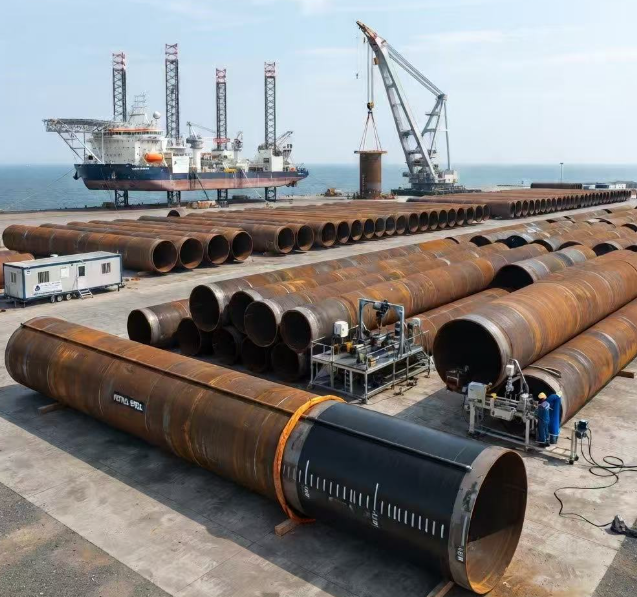
Large EN 10219 CHS is specified for building columns and transfer trusses, stadium and airport roof structures, pedestrian and road bridge members, crane and port structures, jetty frames, and as pile sleeves or casings in foundation work. Demand has been steady in the Middle East, Europe, Southeast Asia, Africa, and Australia, where infrastructure and energy-transition projects keep needing heavy tubular steel. For EPC contractors and steel fabricators, the commercial questions are usually the same: can the mill hold the delivery window, can the wall and diameter be mixed in one order, and will the documentation survive a client audit? We build our quotations around those three points.
Coating, end preparation, packing, and shipping
Large-diameter pipes are damaged more often in handling than in production, so we plan packing with the order. Pipes are stacked in cradles with timber or rubber spacers, end protectors are fitted on beveled ends, and heavy sections are secured for sea freight in open-top or break-bulk shipments, depending on size. Coatings range from simple varnish for short-term storage to 3LPE, FBE, or epoxy systems for aggressive environments, and we can apply marking in line with your project’s numbering. Delivery terms are quoted FOB or CIF to your port, and lifting weights per length are given in the quotation, so your site crane planning is not a surprise.
How to request a quotation
Send us the outside diameter, wall thickness, steel grade, quantity, and destination port, plus the drawing or project specification if you have one. If a third-party inspector or a particular coating or special marking is required, tell us at the same time. We will reply with a clear offer covering price, lead time, MOQ, documentation, and inspection plan. For RHS or SHS, please add the section size and the corner radius requirement so we can confirm feasibility before quoting. Send OD, WT, grade & quantity to our sales team using the inquiry form below.
FAQ
Q1. What is the difference between EN 10219 and EN 10210 hollow sections?
EN 10219 covers cold-formed welded hollow sections. EN 10210 covers hot-finished hollow sections, which may be seamless or welded. For large diameters, EN 10219 is usually the more economical route, while EN 10210 is often chosen for heavily loaded nodes. Always follow the standard named in your structural design, and we will not substitute one for the other without your written approval.
Q2. What does S355J2H mean?
S355 is the minimum yield strength in MPa. J2 means the steel is Charpy impact tested at 27 J at −20°C. H stands for hollow section. Yield strength is 355 MPa up to 16 mm wall and steps down to 345 MPa from 16 to 40 mm, so always check the value for your actual wall thickness.
Q3. Why choose SAWL instead of SSAW or HFW?
SAWL has one straight longitudinal weld and suits large diameters with heavy walls, which makes cutting, mitering, and node welding more predictable. HFW is the usual choice for smaller sizes. SSAW, with its helical seam, is a lower-cost option where the design permits it. We will recommend the process that fits your drawings, not the one that is easiest for us.
Q4. What certificates do you provide?
Every shipment includes an EN 10204 3.1 mill test certificate showing heat analysis, mechanical test results, and NDT records. EN 10204 3.2 is available when a third-party inspector witnesses the tests. If your project needs CE marking or EN 1090 support documents, tell us at the inquiry stage.
Q5. Can SGS, BV, or TÜV inspect at your mill?
Yes. We agree the inspection plan and hold points with you before production starts, then give your inspector access to weld testing, hydrostatic testing, and final dimensional checks. An inspector appointed by your own company is equally welcome.
Q6. Do you supply RHS and SHS as well as CHS?
Our core SAWL range is CHS from OD 457 mm upward. RHS and SHS are quoted project by project. Please send the section size, wall thickness, and corner radius, and we will confirm feasibility before issuing a price.
Q7. What is your maximum wall thickness, and are there special conditions above 40 mm?
We supply wall thicknesses from 8 to 50 mm. The EN 10219 property tables are written up to 40 mm, so walls above that are supplied under the agreed project specification, with test requirements confirmed in writing before order placement.
Q8. What do you need to prepare a quotation?
Please send the outside diameter, wall thickness, steel grade, quantity, and destination port. Add the drawing or project specification, and tell us about any coating, third-party inspection, special marking, or CE/EN 1090 requirements. We reply with price, lead time, MOQ, documentation, and inspection plan.
Q9. What are the differences among RHS, SHS, and CHS?
These are the three section shapes in EN 10219. CHS (Circular Hollow Section) is a round tube specified by the outside diameter and wall thickness. It resists torsion and bending equally in every direction, which suits columns, trusses, bridge members, and foundation sleeves. SHS (square) has four equal sides, and RHS (rectangular) has two different side lengths. Their flat faces ease beam connections, and RHS adds stiffness in one direction, which suits beams and purlins. Our SAWL process is mainly used for large CHS.