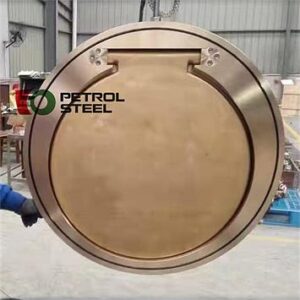
One of the most frequent questions we get from EPC contractors, shipyards, marine equipment importers, and offshore project buyers regarding sourcing ASTM ANSI Bronze Marine Valves is C83600 vs C95800. Both of these materials are used in bronze or copper-alloy valve applications, and while both are described as ‘marine bronze,’ they are not interchangeable. ASTM B62 specifically covers the bronze C83600. The alloy is UNS C83600 and is commonly known as the 85-5-5-5 bronze used for component castings of valves, flanges, and fittings. C95800 is a nickel-aluminum bronze and is covered by ASTM B148, the specification for aluminum-bronze sand castings. Drawing on over 20 years of technical experience on international piping and valve projects, PETROL STEEL has found the real procurement question is rarely “Which alloy is better?” but rather, “Which material is appropriate for this particular service, valve design, and project specification?” This difference is particularly relevant for seawater, ballast water, offshore, desalination, and marine utility systems where the selection of materials needs to be considered along with pressure, temperature, flow conditions, corrosion environment, and the entire valve construction.
| Parameter | C83600 | C95800 |
| UNS Designation | C83600 | C95800 |
| Alloy Family | Composition: bronze/tin-containing bronze | Nickel-aluminum bronze |
| Typical ASTM Material Standard | ASTM B62 | ASTM B148 |
| Material Form | Component castings for valves, flanges, and fittings | Aluminum-bronze sand castings |
| Typical Material Characteristics | Conventional bronze valve material with good castability and general corrosion resistance | High-strength aluminum-bronze alloy commonly considered for demanding marine service |
| Typical Applications | General marine piping, water service, shipboard utility systems, and industrial valves | Seawater, offshore, desalination, marine cooling, and other demanding water-service applications |
| Typical Valve Types | Gate, globe, check, angle, and other bronze valves | Gate, globe, check, butterfly, ball, and other marine/offshore configurations |
| Main Selection Consideration | Project material specification and service compatibility | Service conditions, corrosion environment, mechanical requirements, and project specification |
| Replacement Application | Commonly relevant where the existing valve is C83600 | Commonly considered where project specifications call for nickel-aluminum bronze |
| Procurement Priority | Confirm alloy, valve rating, dimensions, and documentation. | Confirm alloy, complete wetted construction, rating, service conditions, and documentation. |
C83600: A Conventional Bronze Material for Marine and Industrial Valves
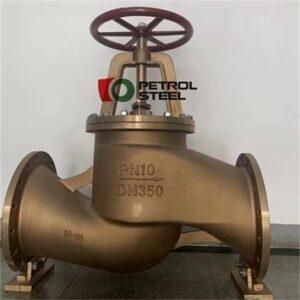
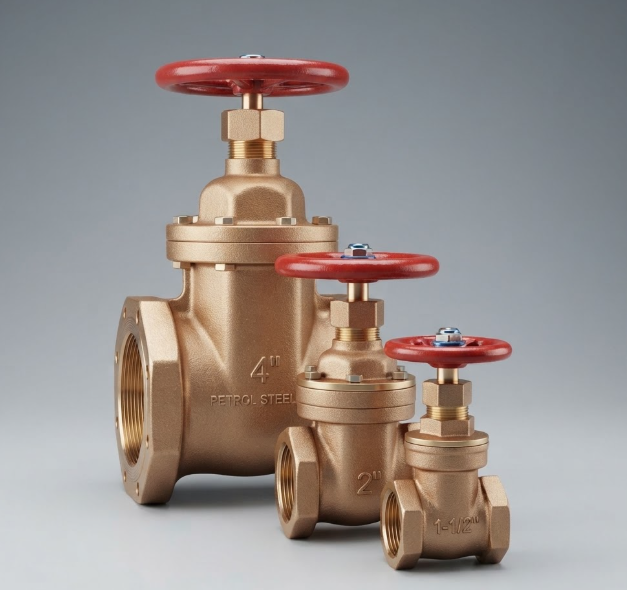
C83600 is a composition bronze with copper, tin, lead, and zinc. The ASTM B62 specification establishes requirements for this alloy and identifies the trade name as 85-5-5-5 bronze and the proper alloy designation as UNS C83600. The standard is directly applicable to component castings for valves, flanges, and fittings. This makes C83600 a proven material for traditional bronze valve construction and suitable for a variety of water, marine, and industrial services where the project specification permits. Typical configurations include bronze gate valves, globe valves, check valves, angle valves, and other project-specific designs. The key point for buyers, however, is that ‘marine application’ does not mean that every C83600 valve will be suited to every marine medium. A ship can have freshwater, seawater, ballast water, cooling water, firewater, fuel, and other systems, each of which requires different materials. So, C83600 should be chosen based on the actual service and approved project specification, not just because the valve will be installed on a vessel. PETROL STEEL has a specific product reference for technical review for buyers looking specifically for C83600 and C95800 DIN Marine Bronze Globe Valves: C83600 / C95800 DIN Marine Bronze Globe Valves.
C95800: Why Is Nickel-Aluminum Bronze Frequently Considered for Marine Service?
C95800 is a nickel-aluminum bronze alloy. ASTM B148 covers the requirements for aluminum-bronze sand castings and includes C95800 as one of the UNS alloys specified. C95800 is often specified in international marine procurement where the combination of mechanical performance and marine corrosion resistance is important, particularly in seawater, offshore, desalination, shipbuilding, and marine utility applications. Typical valve configurations include gate, globe, check, butterfly, and ball valves depending on the design and project specification. However, professional procurement should not describe C95800 as just a universally “better” C83600. The suitable material depends on the design basis. For instance, a seawater cooling system may need different considerations than a freshwater utility line. And a desalination plant, offshore platform, and shipboard ballast system may each need different material and inspection requirements. Therefore, the engineering team should confirm the material after evaluating the design pressure, operating pressure, temperature, flow velocity, medium chemistry, valve frequency of operation, and corrosion environment. C95800 can be a good candidate for demanding marine service. However, the final material selection must be in accordance with the project material specification and applicable standards.
Why Should EPC Buyers Review the Complete Valve Construction?
A common technical misunderstanding during international valve procurement is the focus only on body material. A quote that says “C95800 Marine Valve” does not necessarily specify the material of each part in contact with the service media. For an EPC project, the buyer may require the body, bonnet, disk or wedge, stem, seat, seat ring, ball where applicable, fasteners, and other pressure-containing or wetted components to be reviewed. This becomes particularly important in seawater and offshore applications because corrosion performance is a system-level consideration and not just a product-label issue. The same is true for pressure and dimensional compatibility. Even if a C83600 or C95800 casting is technically correct, it may not be suitable for the project if it does not have the correct valve pressure class, face-to-face dimension, flange drilling, end connection, or design standard for the piping system. From the point of view of technical procurement, PETROL STEEL recommends that the buyer advise the supplier of the valve type, NPS/DN, pressure class, material grade, service medium, design temperature, operating pressure, end connection, applicable standard, inspection requirement, and quantity. For replacement valves, an existing valve nameplate, GA drawing, or dimensional drawing can be very helpful to improve the accuracy of the quotation.
ASTM B62, ASTM B148, and ASTM B763: Why the Standards Should Not Be Mixed
A frequent source of confusion among international buyers is the relationship between ASTM material standards. ASTM B62 specifically covers the composition of bronze alloy corresponding to C83600 and is directly related to component castings for valves, flanges, and fittings. ASTM B148 includes C95800 aluminum-bronze sand castings. ASTM B763/B763M is written specifically for copper alloy sand castings for valve applications and specifically excludes C83600 and references ASTM B62 as the applicable specification for C83600. This is an important distinction when reviewing supplier quotations and technical submittals. It is not enough for a professional supplier to bundle up ASTM B62, B148, B763, ASME, API, and MSS standards and say they all apply to every bronze marine valve universally. The supplier shall select the material standard applicable to the alloy selected, the valve design standard applicable to the valve, the dimensional or pressure-rating standard applicable to the connection, and the testing and inspection requirements specified by the project. This is especially helpful when performing an EPC document control customer approval third-party inspection.
How Should EPC Buyers Decide Between C83600 and C95800?
The safest way to international procurement is to decide the material from the project specification outwards and not from the product catalog inwards. Unless the EPC engineer approves otherwise, the supplier shall quote C83600 if the approved material specification requires C83600. If the specification requires C95800, the applicable ASTM material specification and C95800 must be stated clearly in the quotations. Where the project is seawater or offshore service, and the material is not specified, the buyer should specify the service conditions and require the supplier to confirm the proposed alloy and complete valve construction prior to placing the order. The same applies to replacement valves: If the existing valve is C83600, then C95800 should not be considered an automatic material upgrade when replacing it. Dimensional, pressure rating, material, and documentation requirements should be reviewed first. PETROL STEEL, with more than 20 years of technical experience and more than 15 years of international trade and project communication experience, suggests that an RFQ should contain at least the following: Valve Type + Size + Pressure Class + Material/UNS Grade + End Connection + Service Medium + Design Conditions + Applicable Standards + Inspection Requirements + Documentation + Quantity + Delivery Requirement. This allows the technical team and manufacturing partners to define the engineering scope prior to commercial quotation so that international buyers can avoid material substitution, incomplete documentation, dimensional mismatch, and unnecessary project delays.
PETROL STEEL Technical Support for ASTM ANSI Bronze Marine Valves
ASTM ANSI Bronze Marine Valves for marine, shipbuilding, offshore, seawater, desalination, energy, and industrial EPC projects. Material options include C83600, C84400, C90500, C95400, and C95800, subject to the applicable product specification and project requirements. Our approach is to blend 20+ years of technical experience in international piping and valve procurement with 15+ years of international trade and export project experience. Before providing a quotation, we can review a valve schedule, datasheet, GA drawing, existing valve nameplate, material specification, or project technical specification for EPC contractors, engineering companies, shipyards, marine equipment importers, distributors, and project owners. This allows the review of the inquiry from an engineering and procurement perspective, such as material selection, valve configuration, dimensional compatibility, inspection requirements, quality documentation, and export requirements. If you are looking for a specific configuration of the C83600 or C95800 marine globe valve, please check our C83600 / C95800 DIN Marine Bronze Globe Valves product page for product details.
Before approving an ASTM ANSI Bronze Marine Valve, international buyers should confirm:
| Procurement Item | What the Buyer Should Confirm |
| Material | C83600 / C90500 / C95400 / C95800 or specified UNS grade |
| Material Standard | ASTM B62 / ASTM B148, as applicable |
| Valve Type | Gate / Globe / Check / Ball / Butterfly / Angle |
| Size & Rating | NPS/DN + Class / PN + design pressure |
| Service | Seawater / Ballast / Cooling Water / Firewater / Freshwater |
| Construction | Body, bonnet, disc/wedge, stem, seat, and other wetted parts |
| End Connection | Flanged / Threaded / Wafer / Lug, as applicable |
| Inspection | MTC / pressure testing / dimensional inspection / TPI / classification requirements |
| Documentation | MTC, test reports, ITP, and project-specific documents |
| Replacement | Face-to-face, flange drilling, and existing valve dimensions |
Final Takeaway
C83600 is not a marine bronze valve. C95800 is a different type of copper-alloy material. C83600 is specifically for ASTM B62 composition bronze castings for valves, flanges, and fittings, while C95800 is for ASTM B148 aluminum-bronze sand castings. The right choice depends on the material spec, service medium, pressure, temperature, corrosion environment, valve design, complete wetted construction, applicable standards, and inspection requirements.
In professional EPC procurement, the goal is not to select the “strongest” or “most expensive” bronze alloy but to select a valve construction that is technically compatible with the project and properly documented for approval and installation.
PETROL STEEL—Global Pipeline Solutions Partner for Oil & Gas, Energy, and Industrial EPC Projects.